Self-Drive Africa
Rental Option Guide
East Africa & Southern Africa — Routes, Vehicles & Camping
Across East Africa and Southern Africa, the infrastructure for independent self-drive car hire has matured enormously, with dozens of specialist operators now offering fully outfitted 4WD vehicles, rooftop tent camping packages, and flexible one-way car hire options that allow travellers to drive across multiple countries without backtracking.

Why Self-Drive Is the Most Rewarding Way to Explore Africa
Few travel experiences rival the freedom of a self-drive safari — the ability to stop when a cheetah crosses the track, to sleep under the Milky Way inside a national park, or to deviate from the standard itinerary entirely because you heard there was a waterhole teeming with elephants just eight kilometres off the map. Across East Africa and Southern Africa, the infrastructure for independent self-drive car hire has matured enormously, with dozens of specialist operators now offering fully outfitted 4WD vehicles, rooftop tent camping packages, and flexible one-way car hire options that allow travellers to drive across multiple countries without backtracking.
This guide covers everything you need to plan a self-drive overland adventure, from choosing the right vehicle class to understanding cross-border permit requirements, from selecting a camping route in Namibia to planning a one-way 4WD drop from Nairobi to Arusha.
Northern Tanzania Wildlife Circuit
This is the most popular self-drive safari route on the continent. Departing Arusha and returning to Arusha after 10–14 days, the circuit covers Tarangire National Park (famous for its elephant concentrations and baobab forests), Lake Manyara (tree-climbing lions, flamingos), the Ngorongoro Crater Conservation Area.
Kenya → Tanzania one-way drop
7–10 days One-way
Nairobi – Amboseli – Namanga border – Arusha
One-way self-drive car hire between Kenya and Tanzania is possible through a handful of operators who maintain cross-border agreements and provide the necessary documentation (a letter of authority from the hire company, Tanzanian road permits, and comprehensive insurance covering both countries).
Uganda gorilla trekking circuit
8–12 days Loop Camping
Kampala- Queen Elizabeth NP- Bwindi- Lake Mburo
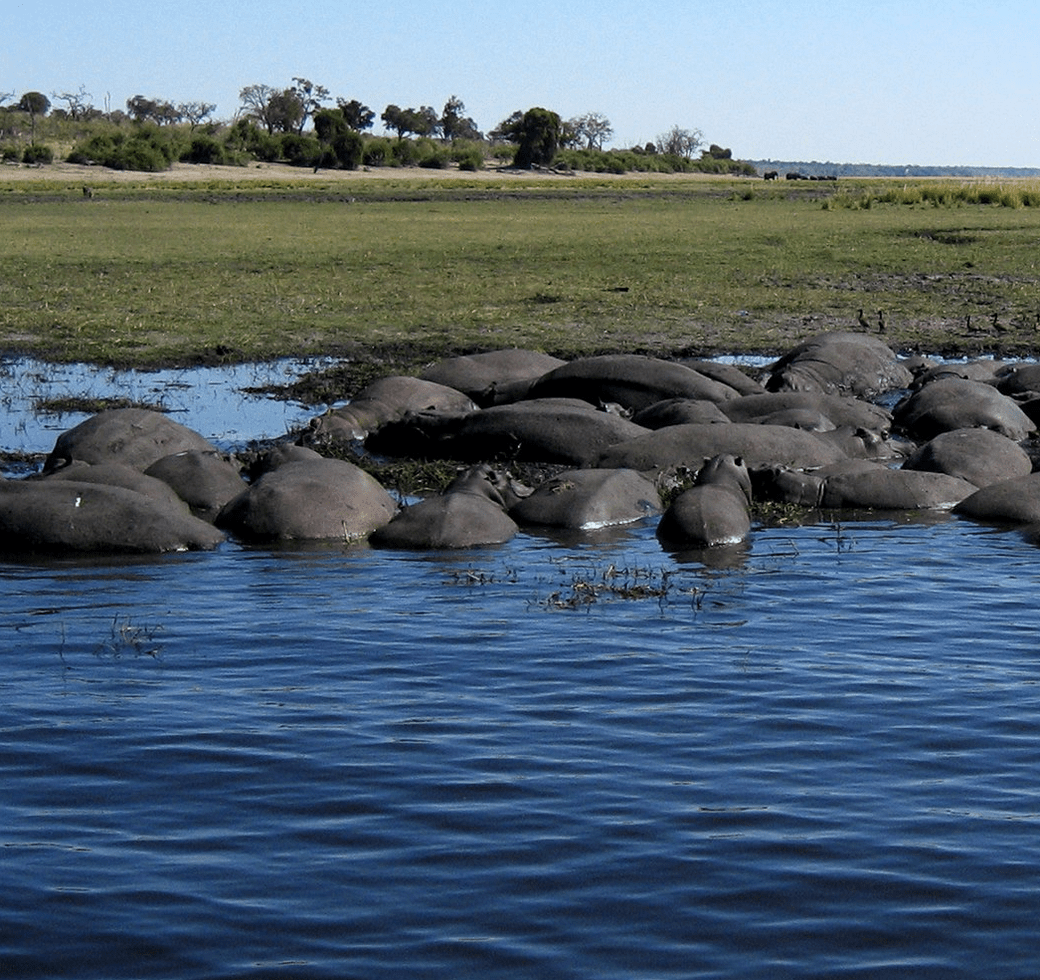
Uganda is underrated as a self-drive destination. A 4WD with rooftop tent hired in Kampala can cover Queen Elizabeth National Park (tree-climbing lions, hippo boat safaris on the Kazinga Channel), Bwindi Impenetrable Forest (mountain gorilla trekking — permits booked separately at USD 700/person), Lake Bunyonyi, and Lake Mburo National Park in 8–12 days.
Kenya Maasai Mara & Rift Valley loop
Nairobi- Lake Naivasha- Maasai Mara- Nairobi
A 5–7 day self-drive loop from Nairobi, this is the most accessible multi-day off-road camping route for first-time East Africa visitors. The route drops into the Great Rift Valley escarpment, passes Hell’s Gate National Park (through open game country is unique in Africa), circles Lake Naivasha, and then continues southwest to the Maasai Mara National Reserve via the Mara North
Namibia self-drive grand loop — the definitive African road trip
Namibia is the most self-drive-friendly country in Africa and consistently ranks among the top self-drive destinations worldwide. Over 80% of the country’s road network consists of well-graded, well-signed gravel roads that are passable in a 2WD sedan during the dry season (May–November), though a 4WD with rooftop tent hire is strongly recommended for flexibility, particularly if venturing into the NamibRand Nature Reserve, the Kaokoveld, or the southern Namib’s Sossusvlei dunes access road.
A 14–21 day self-drive camping loop from Windhoek covers the country’s major highlights: Etosha National Park (one of Africa’s finest wildlife parks, with a network of public campsites ringing a mineral pan that draws enormous concentrations of game), Damaraland (desert-adapted elephants and the ancient rock engravings of Twyfelfontein), the Skeleton Coast (a raw, atmospheric wilderness of seal colonies and shipwrecks), Swakopmund (the colonial-era coastal town that serves as a rest stop and adventure activity hub), Sossusvlei (the world’s tallest orange dunes at sunrise), and the Fish River Canyon (second largest canyon on earth). Campsites inside Etosha — Okaukuejo, Halali, and Namutoni — are run by Namibia Wildlife Resorts and are bookable online; expect NAD 300–600 per site per night for excellent fenced camping with floodlit waterholes.
Cape Town to Victoria Falls — the great Southern Africa one-way overland
For travellers with 3–4 weeks, a one-way self-drive from Cape Town to Victoria Falls via Namibia or Botswana is among the most spectacular road journeys on earth. The standard routing moves through the Karoo, up through Upington, into Namibia’s southern desert, across Botswana’s legendary Chobe National Park (where the Chobe River produces the highest concentration of elephants on earth), and concludes at Victoria Falls on the Zambia-Zimbabwe border.
One-way car hire in Southern Africa across borders requires advance coordination with the rental operator. Companies including Bushlore, Avis 4×4, and Hertz Mozambique operate dedicated cross-border permit programmes that include a SADC cross-border vehicle authorisation letter, COMESA (Common Market for Eastern and Southern Africa) motor vehicle insurance, and temporary import permits for Botswana and Zimbabwe. Drop fees for Cape Town to Victoria Falls one-way car hire typically range from USD 400 to USD 600. It is essential to confirm cross-border permissions at the time of booking, not on pick-up day.
Botswana Okavango and Kalahari self-drive camping safari
Botswana represents the most technically demanding and most rewarding self-drive camping experience in Africa. The country has deliberately limited tourist numbers by keeping park fees high and infrastructure minimal — there are no fenced lodges in the Central Kalahari Game Reserve (CKGR), no fuel stations for 300 km stretches, and no phone signal across vast sections of the Okavango Delta’s land approaches. This is precisely why experienced overlanders regard Botswana as the pinnacle of African self-drive adventure.
A 10–14 day loop from Maun into Moremi Game Reserve, out via the Khwai community concessions, down through the Makgadikgadi Pans, and into CKGR requires: a fully-equipped 4WD with a minimum 130L auxiliary fuel capacity, a complete recovery kit (snatch strap, MaxTrax sand boards, hi-lift jack, tyre deflator and inflator), 15L drinking water reserve per person, and a full GPS mapping system preloaded with Tracks4Africa or MapAfrica data. Self-drive car hire operators in Maun, including African Overlanders and Wilderness Wheels, supply appropriately equipped vehicles. This route is recommended for experienced 4WD travellers only or those who have completed a short off-road driving course.
South Africa Kruger National Park self-drive road trip
For first-time African self-drive visitors, the Kruger National Park represents the perfect introduction. All roads inside the park are gravel or tar, accessible by any standard 2WD hire car. The self-drive game drive experience is excellent — major camps including Satara, Letaba, Olifants, and Lower Sabie are in the heart of the wildlife-rich areas, and driving at the 50 km/h speed limit gives ample time to spot lion, leopard, elephant, rhino, and buffalo (the Big Five are all well-represented). South African National Parks (SANParks) manages excellent fenced camping sites at all rest camps, fitted with braai (barbecue) facilities, electrical points, and ablution blocks — a far cry from bush camping in Botswana. Rates are ZAR 300–600 per site per night. Self-drive car hire from Johannesburg OR Pretoria for a Kruger circuit requires no 4WD and costs from ZAR 500/day with standard insurance.
Most Popular
- All Posts
- Personal
- Professional
- Self drive Tours
- Seo
Inspiring New Talent
It presents a wrist-hugging oval of gold, punctuated with.
Post Category
Post Tag
About
- Self-Drive Safaris & Car Hire Across East Africa
- /
- Self drive rental options
Practical Considerations for Cross-Border Self-Drive Car Hire in Africa
One-way car hire logistics are the most common planning challenge. Most standard car hire agreements prohibit cross-border travel entirely. Specialist overland operators build cross-border permission into their contracts from the start, but travellers using mainstream agencies (Avis, Budget, Hertz, Europcar) must explicitly request and pay for cross-border extensions, which are only granted for specific country pairs on approved routes.
Rooftop tent camping versus lodge accommodation is a budget question as much as a style question. A self-drive camping safari in East Africa or Southern Africa using a rooftop tent hire vehicle costs roughly 40–60% less per night than staying in even budget-level lodges, once accommodation savings are compounded over 10–14 nights. The trade-off is comfort in extreme weather and the logistical overhead of setting up camp each evening.
Camping gear hire is widely available in South Africa, Kenya, and Namibia. Travellers who hire a standard 4WD without a camping package can rent sleeping bags, camp kitchens, portable fridges, chairs, and tables from dedicated camping gear hire companies in Nairobi, Johannesburg, Windhoek, and Cape Town, typically at USD 15–30/day for a comprehensive two-person kit.
Insurance for self-drive safaris should include a Collision Damage Waiver (CDW), Theft Protection (TP), and third-party liability extension. Most operators exclude windscreen and tyre damage from standard packages — a windscreen waiver and tyre insurance add-on is strongly recommended given the prevalence of gravel roads in both regions.
International Driving Permit (IDP) plus your home country licence is mandatory in Tanzania, Uganda, Botswana, and Namibia for foreign-registered drivers. Kenya accepts most EU, UK, US, and Commonwealth licences without an IDP, though carrying one is always advisable.
Best time for self-drive car hire in Africa varies by region. East Africa’s dry season runs June to October (July–September optimal for wildebeest migration), with a short dry window in January–February. Southern Africa’s dry season runs May to September, with July–September providing the best game viewing in Botswana and Zimbabwe’s waterless parks, when wildlife concentrates around permanent water sources. Namibia is driveable year-round, though the summer rains (November–April) affect desert road conditions significantly.
Eco-Clothes For
Your Fashion Way
East Africa Self-Drive Car Hire: Vehicles, Routes and Destinations
Choosing the Right Vehicle for East African Self-Drive Safaris
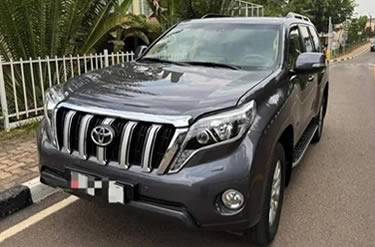
The most important decision in planning a self-drive safari in Kenya, Tanzania, Uganda or Rwanda is vehicle selection. The region’s terrain ranges from well-maintained tarmac highways connecting major cities to flooded black cotton soil tracks in the Maasai Mara, deeply rutted volcanic tracks in the Ngorongoro Highlands, and steep muddy forest trails leading to Uganda’s mountain gorilla sectors.

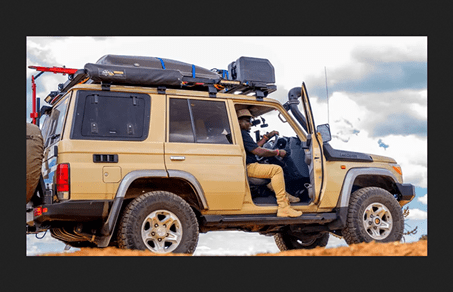
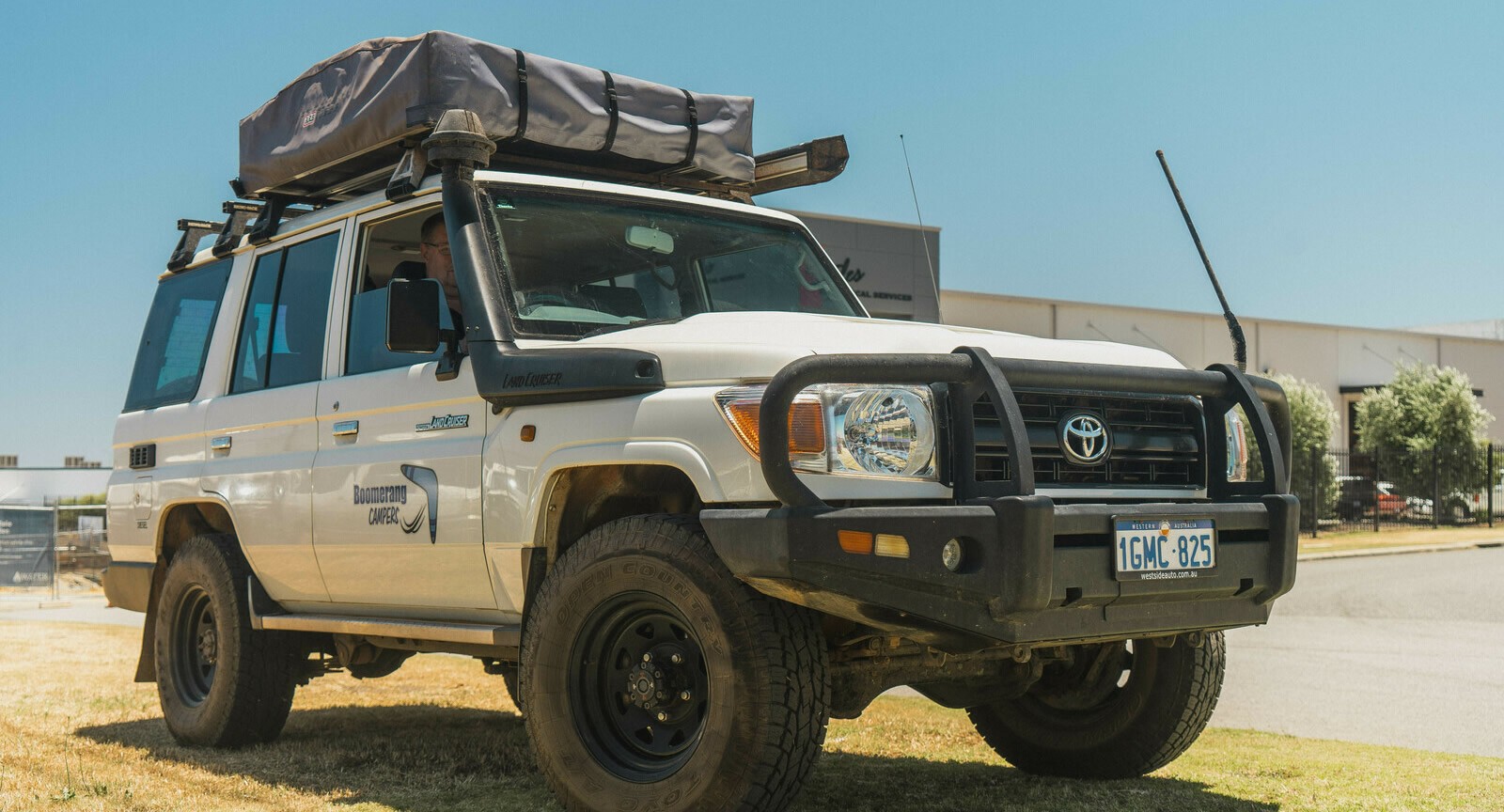
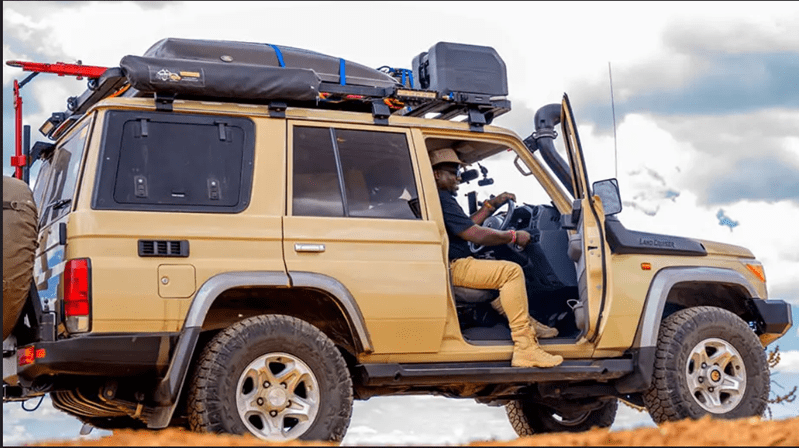
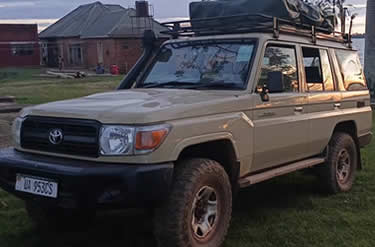
Toyota Land Cruiser V8 (4WD) with rooftop tent
is universally regarded as the gold standard for East African self-drive camping safaris. Its combination of extreme ground clearance, locking differentials, a high-torque diesel engine, and a large payload capacity makes it the only safe choice for Bwindi Impenetrable Forest, the Serengeti's remote northern circuit, and the Amboseli marshlands during rainy season.

Toyota Hilux 4x4 double cab
is the most widely rented self-drive vehicle in East Africa for travellers on moderate budgets. It offers excellent fuel economy of 9–11 litres per 100 km, which matters over long distances. With a canopy and a roof rack fitted with a rooftop tent, it handles the majority of East African national park tracks competently in dry season.

Budget self-drive car hire in East Africa
Toyota Rav4, or Suzuki Grand Vitara is viable on specific routes — principally the Kenya Rift Valley circuit (Nairobi–Nakuru–Bogoria–Baringo), the Kenya coast road (Mombasa–Lamu), and tarmac segments of the northern Tanzania tourist triangle in dry season.
Self-Drive Car Hire in East Africa and Southern Africa: The Complete Guide
Why Self-Drive Is the Most Rewarding Way to Explore Africa
Few travel experiences rival the freedom of a self-drive safari — the ability to stop when a cheetah crosses the track, to sleep under the Milky Way inside a national park, or to deviate from the standard itinerary entirely because you heard there was a waterhole teeming with elephants just eight kilometres off the map. Across East Africa and Southern Africa, the infrastructure for independent self-drive car hire has matured enormously, with dozens of specialist operators now offering fully outfitted 4WD vehicles, rooftop tent camping packages, and flexible one-way car hire options that allow travellers to drive across multiple countries without backtracking.
This guide covers everything you need to plan a self-drive overland adventure, from choosing the right vehicle class to understanding cross-border permit requirements, from selecting a camping route in Namibia to planning a one-way 4WD drop from Nairobi to Arusha.
Self-drive car hire across East Africa and Southern Africa has never been more accessible, better documented, or more richly rewarding. Whether you are planning a 5-day rooftop tent camping loop around Kenya’s Rift Valley, a 3-week one-way overland from Cape Town to Victoria Falls, or a full-immersion bush camping expedition into Botswana’s remote Kalahari, the right vehicle choice and thorough cross-border preparation will unlock travel experiences that no organised group tour can replicate.