Namibia 4×4 Self-Drive Car Hire | Road Trips, Camping & Safaris
Namibia is one of Africa’s most rewarding self-drive destinations — a vast, sun-scorched country of red dunes, salt pans, desert-adapted wildlife, and roads that stretch for hundreds of kilometres without a single traffic light. Whether you’re planning a 4×4 camping road trip through Etosha National Park, a one-way car hire from Windhoek to Swakopmund, or an extended overland safari across multiple countries, Namibia offers the kind of freedom and raw beauty that few destinations on the continent can match.
Unlike many African safari destinations that depend heavily on guided game drives and exclusive lodges, Namibia is uniquely suited to independent travellers. Its roads are generally well-maintained, distances are manageable with the right planning, crime rates are among the lowest in sub-Saharan Africa, and the infrastructure for self-drive tourism — from well-stocked fuel stations to NWR campsite bookings — is genuinely reliable. If you’ve been searching for the best self-drive safari destinations in Africa, Namibia consistently ranks at the top for good reason.
Why Namibia Is Africa’s Best Self-Drive Safari Destination
Most African safari countries require you to travel with a licensed guide inside national parks, or confine you to set game drive schedules at lodges. Namibia is different. In most parks and reserves, you can drive your own hired vehicle, stop where you like, linger at waterholes, and set your own pace entirely. That autonomy is a rare and precious thing in the world of African travel.
The country also has a comparatively low population density — just 3.3 million people spread across 824,000 square kilometres — which means long stretches of open road, uncrowded campsites (outside peak season), and the sense that you’ve genuinely got a wild landscape to yourself. Coupled with exceptional road safety, clear signage on main routes, and a strong culture of responsible tourism, Namibia is an accessible entry point for first-time self-drive safari travellers as much as it is a playground for experienced overland adventurers.
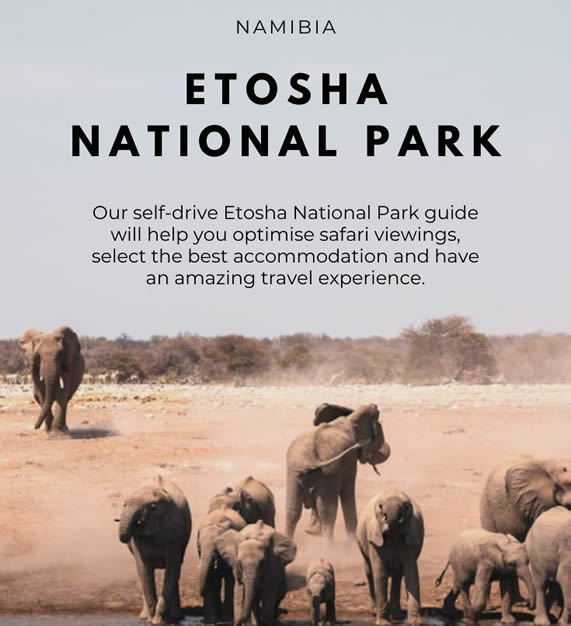
Namibia 4x4 Rentals for self drive and Overland trips
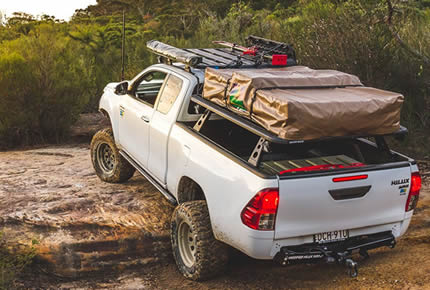
Hilux Pickup with Rooftop tent for Camping
The hiace pick is the most popular truck for Namibia self drive trips. Book this for wildlife trips and one rentals in the Southern Africa.
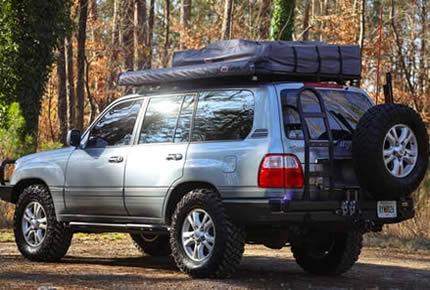
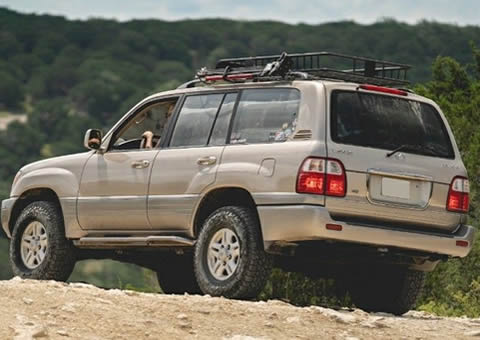
Land Cruiser Toyota for safaris Namibia
Go off road for safaris and camping in Namibia with a 4x4 Land Cruiser equipped for out door safaris. Book today for $110/day with insurance.
Budget Safaris Namibia for independent Travel
The Land Cruiser GX is one of the most reliable 4x4 for Namibia and Africa overlanding safaris on self drive. Rent this suv at $90/day.
Choosing the Right Hire Car for a Namibia Self-Drive Safari
One of the first and most important decisions when planning a self-drive road trip in Namibia is choosing the right vehicle. The honest answer is that it depends on where you plan to go — and how far off the main routes you want to venture.
Do You Need a 4×4 for a Namibia Road Trip?
For a basic circuit covering the main tourist highlights — Windhoek, Sossusvlei, Swakopmund, and Etosha — a standard 2WD sedan or compact SUV will be adequate for most of the year. The B1, B2, and C19 routes connecting these destinations are tarred or well-graded gravel, and vehicles without high clearance manage them comfortably.
However, if your Namibia itinerary includes destinations such as the Skeleton Coast, the remote north of Damaraland, the Kaokoveld, Bwabwata National Park in the Zambezi Region, or any serious off-road detours, a 4×4 vehicle becomes essential rather than optional. Sandy tracks, river crossings, and deeply corrugated gravel roads can quickly become impassable — or dangerous — without four-wheel drive and sufficient ground clearance.
As a general rule: if in doubt, book a 4×4. The added security, particularly when driving solo or in a remote area far from assistance, is worth the additional hire cost.
Best 4×4 Vehicles for Self-Drive Namibia Car Hire
The most popular and widely recommended 4×4 hire vehicles in Namibia include:
Toyota Hilux Double Cab — Rugged, reliable, and widely serviced throughout southern Africa. Ideal for couples or solo travellers who need a balance between load capacity and off-road capability.
Toyota Land Cruiser 79 or 200 Series — The gold standard for serious overlanding in Africa. More expensive to hire but exceptionally capable on sand, rock, and corrugated dirt roads. Preferred by experienced self-drive travellers heading to more remote regions.
Toyota Fortuner — A comfortable mid-size 4×4 SUV that handles most Namibian roads well. Better suited to road tripping than serious off-road driving, but a strong all-rounder for the classic Namibia circuit.
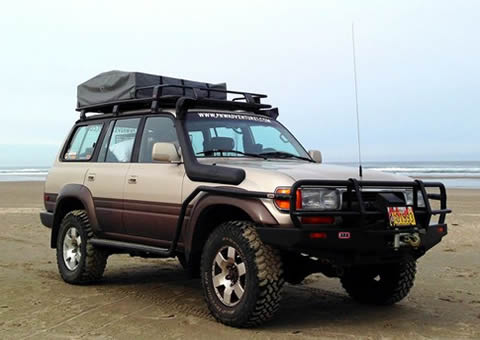
Many car hire companies in Namibia also offer these vehicles in “bush camper” configuration, fitted with a rooftop tent, sleeping equipment, a fridge/freezer, cooking gear, a water tank, and sometimes even a fold-out kitchen. These fully-equipped camping 4×4 hire packages are extremely popular because they eliminate the need for external gear, reduce accommodation costs considerably, and allow you to camp in even the most remote locations.
Most Popular
- All Posts
- Professional
- Safari Guides
- Self drive Tours
- Seo
Inspiring New Talent
It presents a wrist-hugging oval of gold, punctuated with.
Where to Hire a Car for a Namibia Self-Drive Safari
The main hub for car hire in Namibia is Windhoek, which is also home to Hosea Kutako International Airport — the primary entry point for most international visitors. The majority of reputable car hire companies, both international chains and specialist Namibia overland operators, have offices at the airport and in the city centre.
Swakopmund and Walvis Bay on the Atlantic coast are secondary hire locations, useful if your itinerary begins or ends on the coast rather than in the capital. For travellers on a one-way road trip through Namibia, these coastal towns are common drop-off or pick-up points.
When selecting a car hire company for your Namibia safari, pay close attention to:
- Unlimited versus limited kilometres — Long Namibia road trips can easily cover 3,000–5,000 km, so unlimited mileage packages are usually the better value option.
- Roadside assistance coverage — Confirm whether 24-hour roadside assistance is included and whether it covers remote areas.
- Insurance excess and inclusions — Understand exactly what is and isn’t covered. Sand, water damage, and tyre damage are common exclusions on standard insurance policies.
- Vehicle handover procedure — Reputable hire companies conduct thorough pre-departure briefings that cover the specific vehicle, route conditions, fuel availability, and park regulations.
- Cross-border permits — If you plan to take the vehicle into Botswana, South Africa, Zambia, or Zimbabwe, you’ll need a specific cross-border permit from the hire company. Not all companies allow cross-border travel, so confirm this before booking.
One-Way Car Hire in Namibia: Connecting the Country’s Highlights
One of the most practical and popular options for Namibia self-drive road trips is a one-way car hire, which allows you to pick up the vehicle in one city and return it in another. This eliminates the need to double back on routes you’ve already driven and is ideal for linear itineraries that move through the country from north to south, or from the interior to the coast.
The most common one-way hire routes in Namibia include:
- Windhoek to Swakopmund — Covering the dramatic Trans-Kalahari and through the scenic Khomas Hochland, this route is one of the most popular in the country and typically takes four to five hours of driving.
- Windhoek to Lüderitz or Keetmanshoop — For travellers heading south towards the Fish River Canyon, a one-way hire southward from the capital is the most logical option.
- Windhoek to Kasane (Botswana) — For overlanders heading north through the Caprivi/Zambezi Region and into Botswana’s Chobe National Park, cross-border one-way hires are available through selected operators.
It’s important to note that one-way car hire in Namibia typically carries a relocation or drop fee — an additional charge that reflects the cost of returning the vehicle to its origin. The amount varies depending on the hire company and the distance between pick-up and drop-off locations. Confirm this fee upfront before booking, and factor it into your total budget for the trip.
Top Self-Drive Safari Destinations in Namibia
Etosha National Park: Africa’s Premier Self-Drive Wildlife Safari
Etosha is Namibia’s most famous national park and one of the best self-drive wildlife destinations anywhere in Africa. The park is centred on the vast Etosha Pan — a shimmering, ancient salt lake that stretches across roughly 5,000 square kilometres and is visible from space. During the dry season (May to October), the pan’s edges and surrounding waterholes become magnets for wildlife, creating some of the most spectacular game-viewing opportunities on the continent.
Self-drive safaris in Etosha are particularly rewarding because visitors are permitted to park beside illuminated waterholes after dark — something virtually impossible in the Kruger National Park or most East African game reserves. The park is home to the endangered black rhino, large herds of elephant and lion, spotted hyena, giraffe, zebra, blue wildebeest, springbok, and over 340 bird species including the regal crimson-breasted shrike and martial eagle.
All self-drive visitors in Etosha must stay on designated roads and are not permitted to exit their vehicles outside of rest camps. The park has three main rest camps — Okaukuejo, Halali, and Namutoni — each offering campsites, bungalows, restaurants, and fuel. Advance booking of Etosha campsites is essential, particularly in peak season (July to September), as sites fill months ahead.
Sossusvlei and the Namib-Naukluft National Park: Self-Drive Through the World’s Oldest Desert
No Namibia road trip is complete without a sunrise visit to Sossusvlei, home to some of the highest and most photogenic sand dunes on earth. Dune 45 and Big Daddy rise more than 300 metres from the desert floor, their copper-red faces shifting colour through the day from pale gold at dawn to deep ochre at dusk. Nearby, the bleached white clay pan of Deadvlei — scattered with the skeletal remains of ancient camelthorn trees — is one of the most surreal and photographed landscapes in all of Africa.
Access to Sossusvlei is through the Sesriem gate, and the final stretch to the vlei itself (beyond 2WD vehicle reach) requires either a 4×4 or a shuttle from the park’s designated parking area. Self-drive visitors must enter after gate opening and must exit before sunset — plan your visit carefully to maximise time at the dunes during the golden hours. The nearby Sesriem Canyon, carved by the Tsauchab River over millennia, is an excellent late-afternoon detour that requires only a short walk from the road.
The Skeleton Coast: Remote Self-Drive 4×4 Adventure in Namibia
The Skeleton Coast is Namibia at its most primal — a wind-lashed, fog-shrouded stretch of Atlantic coastline where shipwrecks rust in the surf and desert meets ocean at the edge of the world. Named by Bushmen who called it “the land God made in anger,” it is one of the most remote and atmospheric driving destinations in Africa.
The southern section of the Skeleton Coast Park is accessible to self-drive visitors with a standard permit, obtainable at the Ugabmund or Springbokwasser gates. The northern section is restricted to fly-in guests only. Even on the accessible southern routes, a well-prepared 4×4 is mandatory, and travellers must be self-sufficient in terms of fuel, water, and food, as facilities are extremely limited. The reward is a driving experience that feels genuinely remote: Cape fur seal colonies, desert-adapted desert brown hyena, the rusting hulks of shipwrecked trawlers, and horizons that stretch unbroken in every direction.

Damaraland: Desert-Adapted Wildlife and Ancient Landscapes
Stretching through the rugged northwest of Namibia, Damaraland is an extraordinary region of granite mountains, ancient rock art, and wildlife that has adapted to survive in one of the harshest environments on earth. It is here that Namibia’s famous desert-adapted elephants roam, finding water through ancestral knowledge of hidden springs and seasonal riverbeds. Desert-adapted black rhino also exist in this landscape, protected by one of Africa’s most successful community conservation programmes.
The rock engravings at Twyfelfontein — a UNESCO World Heritage Site — are among the most significant examples of San rock art in southern Africa and are easily visited on a self-drive itinerary through Damaraland. Many of the roads in this region require a 4×4 with high clearance, and fuel should be carried in jerrycans as stations are few and widely spaced.
The Zambezi Region (Caprivi Strip): A Tropical Contrast
At the far northeast of Namibia, the Zambezi Region is a world apart from the arid landscapes that define most of the country. Fed by the Zambezi, Chobe, Kwando, and Linyanti rivers, this narrow strip of land is lush, green, and teeming with wildlife in a way that feels more like Botswana or Zambia than Namibia. Bwabwata National Park, Mudumu National Park, and Nkasa Rupara National Park together protect a continuous wildlife corridor that supports large populations of elephant, buffalo, hippo, crocodile, and a remarkable diversity of waterbirds.
Self-drive trips into the Zambezi Region are most rewarding in the dry season when game concentrates around the rivers. This region also serves as an excellent jumping-off point for cross-border self-drive or one-way car hire adventures into Botswana’s Chobe National Park and Victoria Falls in Zimbabwe.
Camping on a Namibia Self-Drive Safari: What You Need to Know
Camping is at the heart of the self-drive Namibia experience, and the country’s network of campsites ranges from NWR-managed rest camps inside national parks to remote, unfenced bush campsites where the only sounds are hyenas and nightjars. Inside national parks, campsites are fenced and serviced, with ablution blocks, braai facilities, and sometimes swimming pools. These sites offer the unparalleled experience of spending the night where the wildlife roams, with waterholes often illuminated after dark for nocturnal game viewing.
Private and community campsites outside the parks tend to be smaller, often unfenced, and increasingly well-designed. Many have outdoor bucket showers, compostable toilets, and kitchen shelters — enough comfort to make for a genuinely enjoyable stay without compromising the sense of being in wild Namibia.
For travellers hiring a fully-equipped bush camper 4×4, the campsite is effectively your home for the duration of the trip. Stock provisions in Windhoek or Swakopmund before heading into more remote regions, and always carry more water than you think you’ll need.
Booking campsites in advance — particularly in Etosha, Sossusvlei/Sesriem, and along the Skeleton Coast — is strongly recommended, especially between June and September. Namibia Wildlife Resorts (NWR) manages bookings for most national park campsites, and their online booking system is the standard starting point for self-drive itinerary planning.
Planning Your Namibia Self-Drive Itinerary: Practical Tips
Best time to visit: The dry season (May to October) offers the best game viewing, most comfortable temperatures in the north, and reliable road conditions throughout. The shoulder months of April and November can be excellent value with fewer visitors.
Fuel planning: Fill your tank whenever you have the opportunity. In remote areas like the Kaokoveld or the far Skeleton Coast, the next fuel station may be 300 km away. Many experienced self-drive travellers carry a minimum of 20 litres in additional jerrycans.
Navigation: A quality GPS device loaded with a Namibia map such as Tracks4Africa is strongly recommended. Mobile data coverage is unreliable in most rural areas, so don’t depend on Google Maps for remote navigation.
Travel insurance: Ensure your policy covers self-drive 4×4 travel and any activities — such as sand dune walking or boat safaris — that you plan to undertake during the trip.
Okonjima Nature Reserve: For travellers passing through the Waterberg area between Windhoek and Etosha, Okonjima is a rewarding stop. Home to the AfriCat Foundation’s cheetah and leopard rescue and rehabilitation programme, the reserve offers guided tracking experiences and the chance to encounter these rarely-seen cats at close quarters.
Namibia rewards independent travellers. Its empty roads, extraordinary landscapes, and commitment to conservation make it one of the few places in Africa where hiring a car and setting your own course feels not just possible, but entirely natural. Whether this is your first self-drive safari or your fifth overland crossing of southern Africa, the country has a way of exceeding expectations — quietly, magnificently, and on its own terms.