Self-Drive 4×4 Safari Tours Across Africa—Your Road, Your Rules
There is something profoundly liberating about navigating a vast African landscape in your own 4×4 vehicle, setting your own pace, choosing your own stops, and waking up to a sunrise over the savannah without a tour itinerary dictating your next move. Self-drive safaris in Africa have grown enormously in popularity over the past decade, and for good reason. They combine the raw authenticity of African wilderness with the independence of road travel, creating an experience that guided tours simply cannot replicate.
Whether you are planning a self-drive safari holiday in Botswana, a cross-border 4×4 road trip through Southern Africa, or a budget camping safari through East Africa, this guide covers everything you need to know — from choosing the right countries and national parks to understanding car hire options, one-way vehicle rentals, cross-border permits, and the best-equipped campsites along the route.
Why Choose a 4×4 Self-Drive Safari in Africa?
A self-drive holiday in Africa is not simply a cheaper alternative to a guided safari. It is an entirely different kind of experience. When you hire a 4×4 camper and set off into the bush on your own schedule, you engage with the landscape on a personal level. You can linger at a waterhole for two hours watching elephants drink, or skip a crowded viewpoint altogether and follow a quiet gravel road that leads somewhere extraordinary.
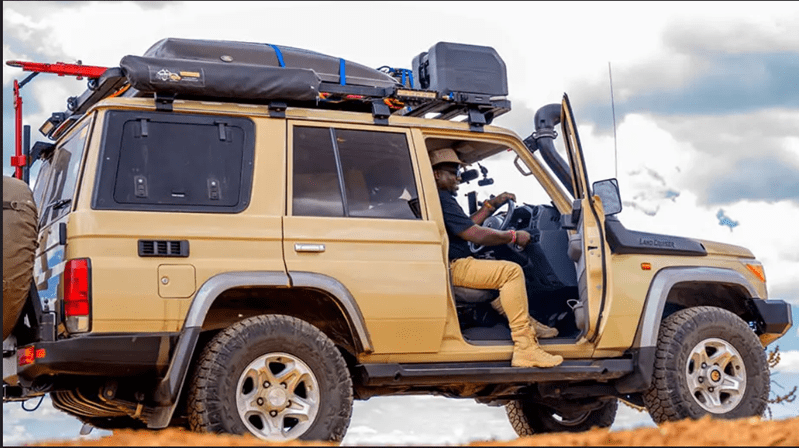
For experienced travelers, a self-drive 4×4 safari in Southern Africa offers unmatched value for money, particularly when traveling as a couple or small family. The cost of a well-equipped 4×4 hire vehicle with a rooftop tent or built-in sleeping platform—when split between two or three people—is far more economical than booking guided lodge safaris across multiple destinations.
Beyond cost, there is the matter of freedom. On a self-drive road trip through Eastern or Southern Africa, you decide when to leave camp, which park entrance to use, whether to camp wild or stay at a full-facility campsite, and how long your journey takes. This level of control over your itinerary is the defining attraction of the self-drive safari.
Namibia: The Classic Self-Drive Destination
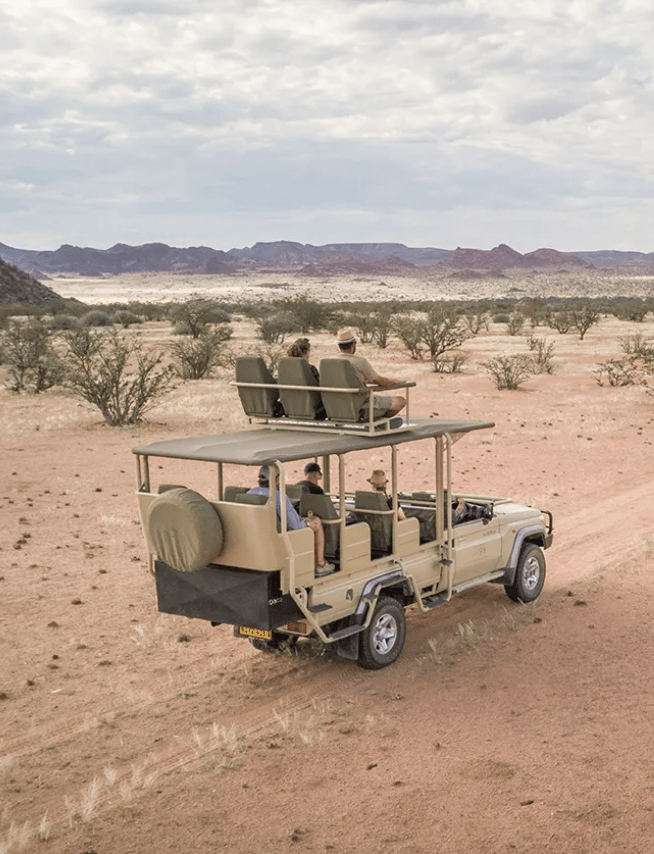
Namibia is consistently ranked as the number one country in Africa for self-drive holidays, and it earns that title comprehensively. The country has a well-maintained network of gravel roads, relatively sparse traffic, and a landscape of breathtaking diversity that rewards those willing to drive long distances.
A classic self-drive Namibia itinerary typically starts in Windhoek, where most 4×4 car hire companies are based. From there, travellers head northwest to Damaraland and Twyfelfontein, south to the iconic Sossusvlei and Deadvlei in the Namib-Naukluft National Park, along the Skeleton Coast, and up into Etosha National Park — one of the continent’s finest wildlife destinations.
Etosha is one of the rare African national parks where self-drive game viewing is not just permitted but actively encouraged. The park’s open pans and floodlit waterholes make wildlife encounters reliable and spectacular. A 4×4 self-drive safari in Etosha is a legitimate bucket-list experience, achievable without a professional guide.
Hiring a 4×4 in Namibia is straightforward. Windhoek has numerous reputable rental agencies offering everything from basic Toyota Land Cruisers to fully kitted expedition vehicles with dual-battery systems, water tanks, camp kitchens, and rooftop tents. Many operators also offer one-way 4×4 rentals in Namibia, allowing travellers to pick up in Windhoek and drop off in Cape Town, South Africa — a popular route.
Botswana: Remote Wilderness and Wild Camping
If Namibia is accessible and well-trodden, Botswana is its wilder, more demanding counterpart. A self-drive safari in Botswana is one of the most rewarding — and most challenging — road trips on the continent. The country’s national parks are underdeveloped by design, keeping visitor numbers low and wilderness quality exceptionally high.
The Okavango Delta, the Central Kalahari Game Reserve, and the Moremi Game Reserve are the headline destinations for self-drive travellers in Botswana. However, these are not parks for the inexperienced. Deep Kalahari sand, river crossings, remote campsites without facilities, and long distances between fuel stations mean that preparation is everything.
A properly equipped 4×4 hire vehicle in Botswana must include a recovery kit with high-lift jack, sand tracks, and a snatch strap. Dual spare tyres are non-negotiable. Many travellers pair a fridge, solar panel setup, and 60-plus-litre water capacity to handle multi-day stays in remote campsites where resupply is impossible.
Wild camping in the Central Kalahari — where the silence at night is absolute, the stars are overwhelming, and lion tracks around your tent in the morning are entirely possible — is the kind of experience that defines a self-drive trip to Botswana.
Zimbabwe: Underrated and Exceptional Value
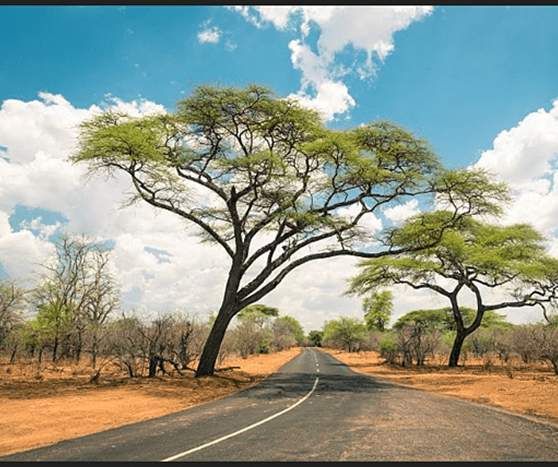
Zimbabwe is among the most underrated self-drive safari destinations in Africa, offering world-class national parks at a fraction of the cost of neighbouring Botswana or South Africa. Hwange National Park, Mana Pools National Park, and Matobo National Park are all accessible by self-drive travellers, and each offers a dramatically different experience. Hwange is Zimbabwe’s largest national park and one of Africa’s great elephant sanctuaries, with a population exceeding 40,000. Self-drive game viewing in Hwange is superb, especially around the dry-season waterholes. Mana Pools, a UNESCO World Heritage Site on the banks of the Zambezi River, allows self-drive access and is famous for its walking safaris and extraordinary predator activity.
Car hire in Zimbabwe is available in Harare and Victoria Falls, with both cities serving as practical entry and exit points for self-drive itineraries. Victoria Falls is a popular node for cross-border self-drive safaris, given its proximity to Zambia, Botswana, and the Caprivi Strip of Namibia.
South Africa is the most accessible African country for first-time self-drive safari travellers. Paved roads, excellent infrastructure, affordable fuel, well-stocked supermarkets, and English as a widely spoken language make it a welcoming introduction to the self-drive safari format.
Kruger National Park is the centrepiece of South African self-drive tourism. The park has an extensive network of paved and gravel roads navigable in a standard 2WD vehicle, though a 4×4 is recommended for side roads and quieter areas. Kruger’s rest camps — from Skukuza and Lower Sabie to remote Punda Maria in the far north — provide a range of accommodation from bungalows to fully serviced campsites.
Beyond Kruger, the Western Cape’s Garden Route, the Drakensberg mountains, and the Richtersveld National Park in the Northern Cape all reward self-drive exploration with a 4×4 hire vehicle.
Many 4×4 car hire companies in South Africa — concentrated in Cape Town and Johannesburg — offer cross-border rental agreements for Namibia, Botswana, Zimbabwe, Zambia, Mozambique, and Lesotho, making South Africa a natural starting point for extended multi-country overland trips.
Zambia: The Authentic African Experience
Zambia offers a level of wild authenticity that few other African countries can match. The country has deliberately positioned itself as a destination for low-volume, high-quality tourism, and its national parks reflect this philosophy. South Luangwa National Park is Zambia’s crown jewel and is accessible by self-drive, though the park’s remote northern sections require experienced off-road driving. The Lower Zambezi National Park, across the river from Zimbabwe’s Mana Pools, is another exceptional self-drive destination. Kafue National Park—one of Africa’s largest—is increasingly popular with overland travelers on a self-drive safari from Lusaka. Many travelers entering Zambia from Zimbabwe at the Chirundu or Kariba border posts combine both countries into a seamless Southern Africa cross-border 4×4 road trip, making use of campsite networks that span multiple countries.
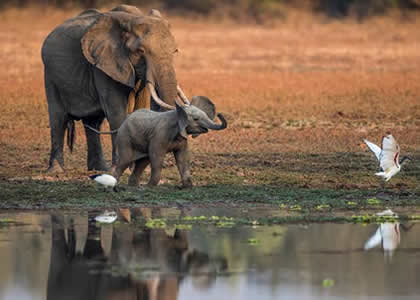
South Luangwa National Park
Park is a national park in eastern Zambia that was founded as a game reserve in 1938 and became a national park in 1972. It covers 9,050 km² in the valley of the Luangwa River,
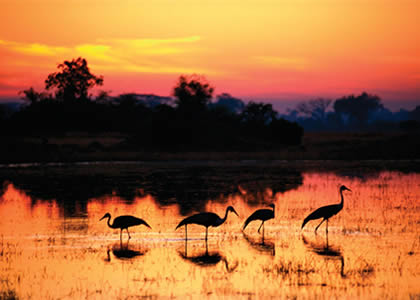
Kafue National Park
Founded in the center of western Zambia, is the oldest and largest of Zambia's national parks, covering a massive 22,400 km². Founded in the 1920s and formally established as a national park in the 1950s
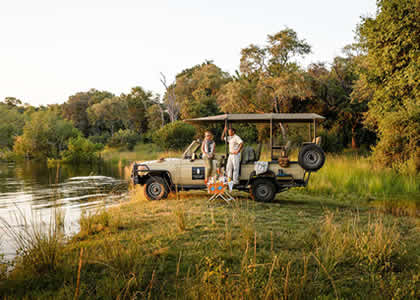
Mosi-Oa-Tunya National Park
Zambia's UNESCO World Heritage Site, home to one half of the mighty Mosi-Oa-Tunya — "The Smoke that Thunders" — known worldwide as Victoria Falls, on the Zambezi River.
East Africa has traditionally been a guided safari market, dominated by lodge-based itineraries through operators in Nairobi and Arusha. However, self-drive safaris in Kenya and Tanzania are gaining traction among experienced independent travellers.
In Kenya, the Masai Mara National Reserve, Amboseli National Park, and Samburu National Reserve are all self-drive accessible. Nairobi has a growing number of reputable 4×4 hire companies in Kenya, offering Toyota Land Cruisers and Land Rover Defenders with rooftop tents suitable for camping within the parks.
Tanzania presents more logistical complexity for self-drive travellers, but the reward is access to the Serengeti, Ngorongoro Crater, Lake Manyara, and Tarangire — collectively forming one of the most extraordinary wildlife corridors on the planet. A self-drive safari in the Serengeti requires a 4×4 with high clearance, navigation tools, and considerable preparation for fuel logistics, as stations are sparse in the north.
Uganda and Rwanda, while primarily known for mountain gorilla trekking, also offer opportunities for self-drive travellers, particularly in Bwindi Impenetrable Forest and Queen Elizabeth National Park in Uganda, and Akagera National Park in Rwanda.
Key destinations
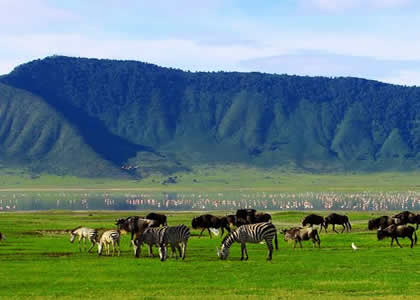
Ngorongoro Conservation Area
Often called Africa's Eden, the Ngorongoro Conservation Area in northern Tanzania spans 8,300 square kilometres of protected wilderness where wildlife, nature, and people coexist
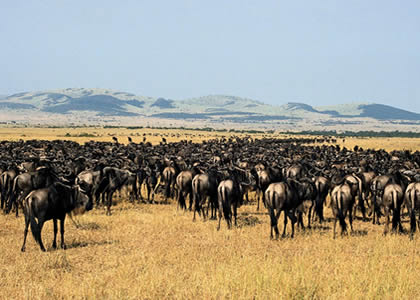
Serengeti National Park
It is Tanzania's flagship safari destination and one of the most iconic wildlife reserves in the world. Covering approximately 14,763 km² in northern Tanzania, it lies at the heart of the greater Serengeti-Mara ecosystem.
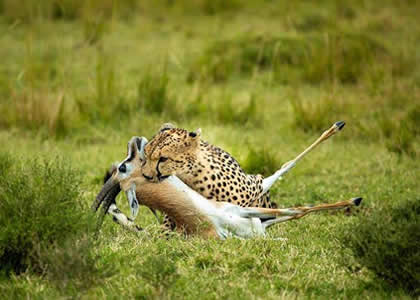
Masai Mara: Africa's Most Iconic Wildlife Reserve
The Masai Mara National Reserve is one of Africa's most attractive and iconic safari destinations, attracting over 300,000 visitors each year, making it Kenya's most visited protected area
Cross-Border 4×4 Safaris in Southern Africa
One of the most compelling aspects of self-drive tourism in Africa is the ability to cross international borders in your hire vehicle and explore multiple countries on a single trip. The KAZA (Kavango-Zambezi) Transfrontier Conservation Area, for instance, encompasses parts of Botswana, Zimbabwe, Zambia, Namibia, and Angola — and is traversable in a single extended self-drive itinerary.
A popular cross-border self-drive safari route runs from Windhoek in Namibia through Botswana’s Chobe National Park, across to Victoria Falls in Zimbabwe, into Zambia’s Livingstone area, and back through Botswana’s Nata and Maun — all within a three-week itinerary.
Before embarking on any cross-border 4×4 road trip in Africa, travellers must confirm the following with their car hire company:
- Cross-border permits: Most 4×4 hire companies issue country-specific authorisation letters required at border crossings.
- Insurance validity: Confirm that your vehicle insurance extends to all countries on your route. COMESA Yellow Card insurance is the standard regional document.
- Third-party road permits: Some countries require additional road permits or eco-levies, particularly for foreign-registered vehicles.
- Border crossing hours: Many border posts in remote areas have limited operating hours. Planning crossing times around this is essential.
Reputable 4×4 car hire companies specialising in Southern and Eastern Africa cross-border rentals will guide clients through this documentation process as part of the vehicle hire agreement.
Camping is at the heart of the self-drive safari experience. Whether you are sleeping under a rooftop tent in a national park campsite or pitching a ground tent at a wild bush camp, camping connects you to the African landscape in a way that lodge accommodation simply does not.
Rooftop tent hire is the most popular camping setup for African self-drive tours. Mounted on the roof rack of a 4×4, rooftop tents unfold quickly, keep occupants elevated above the ground (important in areas with wildlife), and offer excellent comfort. Many 4×4 camping hire packages in Southern Africa include a rooftop tent, sleeping bags, cooking equipment, a 12V fridge, and a camp kitchen as standard.
National park campsites vary widely in facilities. South Africa’s SANParks camps and Namibia’s NWR (Namibia Wildlife Resorts) sites typically offer ablution blocks, electric points, and braai grills. Botswana’s DWNP campsites in parks like the Central Kalahari are unfenced and without facilities — a genuine wilderness camping experience.
For travellers seeking a middle ground, private campsites — known as “farm campsites” in Namibia and Botswana — offer hot showers, swimming pools, and sometimes a bar or restaurant, while retaining an authentic, low-key atmosphere.
One-Way 4×4 Rentals in Africa: Flexibility Without Backtracking
One of the most practical options for self-drive travellers on long-distance African road trips is the one-way 4×4 hire. Rather than driving back to your departure city, you return the vehicle at a different location — saving days of travel and allowing your itinerary to follow a natural geographic progression.
Common one-way rental routes in Southern and Eastern Africa include:
- Cape Town to Windhoek: Following the N7 north through Namaqualand and into Namibia via the Orange River crossing at Noordoewer.
- Windhoek to Victoria Falls: A classic Namibia–Botswana–Zimbabwe overland route.
- Johannesburg to Livingstone: Through Botswana and the KAZA region.
- Nairobi to Dar es Salaam: An East Africa cross-border route through the Masai Mara, Serengeti, and Ngorongoro.
One-way rentals typically carry a relocation fee, which varies depending on the vehicle type, distance, and the rental company’s fleet positioning needs. Booking in advance is essential, as one-way inventory is limited.
Planning Your Self-Drive Safari: Practical Tips
A successful self-drive 4×4 safari in Africa is built on thorough preparation. The following practical guidance applies across most Southern and Eastern African destinations:
Book campsites in advance: Particularly for South Africa’s Kruger National Park, Namibia’s NWR camps, and Botswana’s popular sites like Savuti in Chobe — availability fills up months ahead during peak season (June to October).
Carry sufficient fuel: Fuel range in remote parks can exceed 300 km between stations. A 30–60 litre supplementary fuel container mounted externally is a wise addition for extended off-road driving.
Download offline maps: Apps like Tracks4Africa and iOverlander are essential navigation tools for self-drive safaris in Africa, particularly in areas with no mobile data coverage.
Understand park rules: Most African national parks require vehicles to remain on designated tracks. In some Zambian and Mozambican parks, night driving is prohibited.
Travel in the dry season: The dry season (approximately May to October in Southern Africa, June to September in East Africa) offers superior game viewing, passable roads in remote areas, and more predictable weather. The wet season can render many dirt roads impassable, even in a 4×4.
Take out comprehensive travel insurance: Ensure your policy covers emergency medical evacuation — a critical consideration in remote areas far from hospital facilities.
Final Thoughts: Africa on Your Own Terms
A self-drive safari in Africa is more than a holiday. It is a test of independence, a lesson in humility before a landscape of immense scale and beauty, and an invitation to encounter wildlife on terms that feel genuinely wild. From the red dunes of the Namib and the waterways of the Okavango to the great migration plains of the Serengeti, the continent rewards those who arrive under their own power and at their own pace.
The combination of affordable 4×4 car hire in Southern and Eastern Africa, extensive campsite networks, and increasingly navigable cross-border permit systems means that a multi-country self-drive safari — once the preserve of hardened overlanders — is now within reach of any well-prepared traveller with a spirit of adventure and a solid set of driving skills.
Book your vehicle early, plan your route carefully, respect the wilderness you move through, and Africa will give you stories that last a lifetime.