Self-Drive 4x4 Road trips Dar es Salaam to Tanzania's Southern Circuit
Dar es Salaam may be chaotic and often overlooked by travelers, but it’s actually one of the best launch points for self-drive safaris in Tanzania, especially into the country’s southern circuit. Beyond the busy streets lies a route into vast savannahs, ancient baobab forests, and quiet national parks that see a fraction of the crowds found on the northern trail (Serengeti, Ngorongoro, Tarangire). Choosing Dar es Salaam with a properly equipped 4×4 vehicle gives you something a guided tour can’t: total freedom. Add a rooftop tent car rental to the mix, and you’re no longer tied to lodges, fixed schedules, or someone else’s pace. You decide where to stop, how long to stay, and which detour is worth taking. This is what 4×4 road trips in Tanzania are really about — independence, not just transportation.
The southern parks themselves make a strong case on their own. They’re larger, far less touristed, and generally more affordable than their northern counterparts, yet the wildlife viewing rivals anything up north. For travelers who want authenticity over crowds, this is the region to explore.
But the appeal isn’t only practical. Longer distances, rougher roads, and unpredictable terrain turn the drive itself into part of the adventure. There’s a different kind of satisfaction in reaching a remote corner of Tanzania because you navigated your way there — compared to simply being driven in by a guide. That sense of self-reliance is central to what makes a self-drive safari in Tanzania so memorable.
The 4x4 rental cars

Rent a 4×4 Pick up hilux in Tanzania
With double rooftop tents, book for 4 persons on self-drive and camping. For a day rent at 200 dollars with all camping gear.
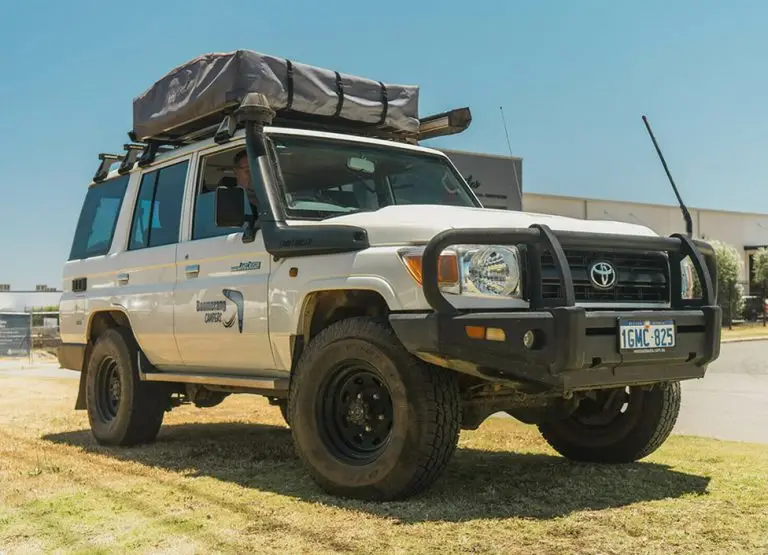
Rent a 4×4 car for budget trips in Tanzania
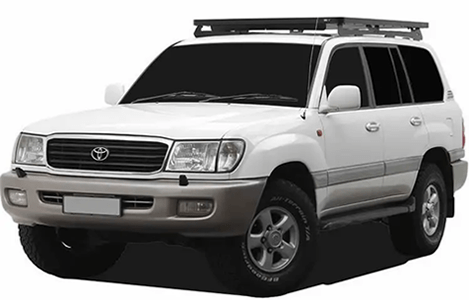
The 4x4 Land cruiser TX is one of the reliable vehicle you can have for Tanzania roadtrips.

Rooftop tent Camping for group tours
We cater to big group safari road trips in Tanzania from Dar es Salaam. We have special rates for group camping trips.
The best time to explore this region
The dry season (June to October) is the best window for travel in southern Tanzania. Roads are firm, vegetation is lower, and wildlife concentrates around permanent water sources in ways that make game viewing dramatically easier. The rains of March through May can make park tracks impassable even in a well-equipped 4×4.
One last thing: go slowly. The temptation on a road trip like this is to cover ground, optimize the route, tick off the parks. Resist it. The best moments are seldom the scheduled ones—they’re the elephant that stands beside your vehicle for fifteen unplanned minutes on a quiet track, the leopard you nearly miss at dusk, the sunset over the Ruaha River with a cold drink in hand and not another vehicle anywhere. That’s what you’re actually driving towards.
Tanzania’s southern wilderness is vast, unhurried, and gloriously undervisited. From Dar es Salaam, it starts less than four hours down the road.
Practical Notes on Self-Drive Safaris from Dar es Salaam
Rent a 4×4 Land Cruiser with a rooftop tent in Dar es Salaam, but check recovery gear, a full spare, and park documentation before departing. Carry extra fuel—rural stations are unreliable, with some southern-circuit stretches spanning 200km without supply. Download offline maps (Maps.me, iOverlander) beforehand, since parks have essentially no mobile data. Dry season (June–October) is ideal for southern Tanzania: firm roads, lower vegetation, and wildlife clustering around water sources. March–May rains can make tracks impassable even for a well-equipped 4×4. Above all, go slowly. Don’t optimize for covering ground or ticking off parks—the best moments are unplanned: an elephant lingering beside your vehicle, a leopard glimpsed at dusk, or a solitary sunset over the Ruaha River. That’s the real destination.
Saadani National Park — 3 to 4 Days | ~180 km from Dar
Saadani is the logical first stop for anyone new to self-drive safari life—partly because it’s close (three to four hours from Dar on reasonable roads), and partly because it offers something you genuinely won’t find anywhere else. It’s the only national park in East Africa where the Indian Ocean forms part of the park boundary. You can finish a game drive watching lions wander across a white-sand beach with dhows on the horizon. It sounds like a postcard, but it’s real.
Wildlife includes elephants, buffalo, giraffe, wildebeest, and an impressive number of warthogs. The Wami River is the other highlight — boat safaris here put you very close to hippos and crocodiles in a way that a game drive never quite manages.
Don’t rush it. Two nights inside the park, one at the beach, and you’ll leave actually rested rather than already planning your next move. The public campsites near the Wami River are basic (bring everything you need) but perfectly positioned for wildlife movement at night.

Mikumi National Park—3 to 4 Days | ~280 km from Dar
Mikumi gets called the “mini-Serengeti” a lot, which does it a mild disservice—it’s its own thing. The Mkata Floodplain at the park’s heart is one of the most consistently productive game-viewing environments in southern Tanzania, and it draws nothing like the tourist numbers you’d see further north.
Lions are the headline act, often found in acacia trees or sprawled on termite mounds. Large herds of elephant, buffalo, zebra, and wildebeest are regular. Wild dogs—one of Africa’s genuinely endangered and thrillingly chaotic predators—are spotted here with decent regularity.
The A7 highway between Dar es Salaam and Zambia runs right past the park entrance, so access is straightforward. Three days gives you two solid game drives, a sunset drive, and the experience of waking up inside the park to baboons and distant lions, which is a fine way to start a morning. Mikumi also works well as a midpoint on longer circuits heading south towards Ruaha and Nyerere.
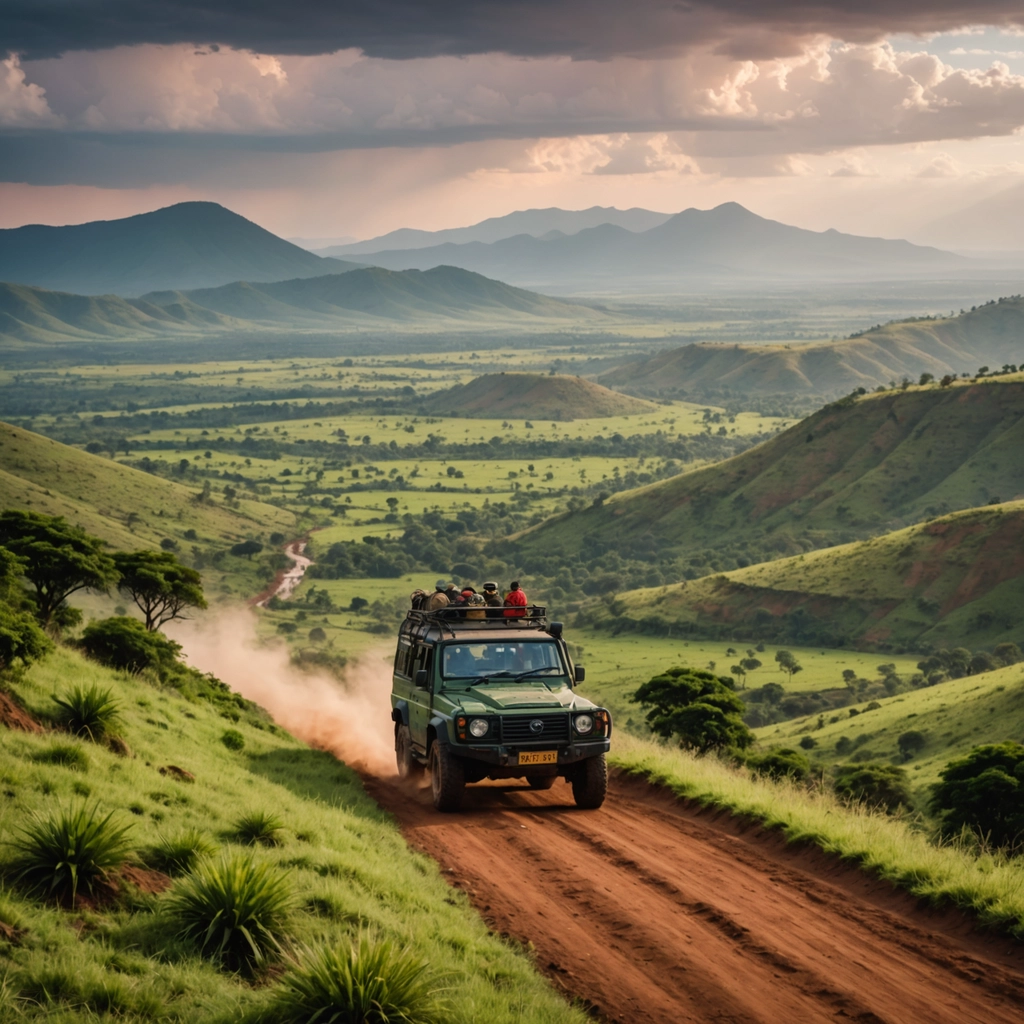
Nyerere National Park — 4 to 5 Days | ~250 km from Dar
Nyerere—renamed in 2019 from Selous Game Reserve to honour Tanzania’s founding father—is enormous. Over 30,000 square kilometres, a UNESCO World Heritage Site, one of the largest protected areas on the planet. Despite all that, visitor numbers are low enough that you’ll regularly find yourself watching a pack of wild dogs hunt, or an elephant herd cross the Rufiji River with no other vehicle in sight.
The Rufiji itself is the park’s defining feature: broad, powerful, flanked by palm forests and fever trees, and home to one of Africa’s largest concentrations of hippos and Nile crocodiles. A boat safari here is worth building your itinerary around—drifting quietly past submerged hippo pods and enormous basking crocodiles, with fish eagles calling overhead, is the kind of thing you’ll still be telling people about years later.
Give yourself at least four nights. The internal tracks require attentive navigation and can be genuinely challenging after rain, but that’s part of the deal. Many people drive the southern circuit as a single loop: south from Dar to Mikumi, two nights, then on to Nyerere for three more. That’s a solid 10-day trip right there.
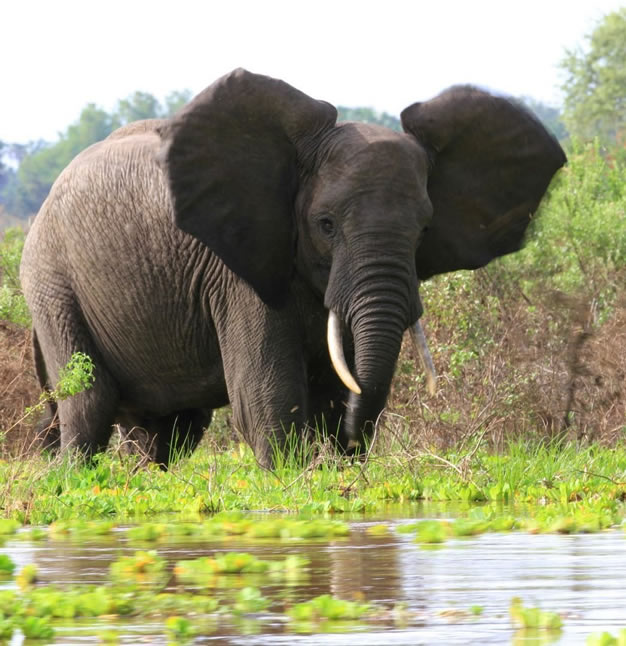
Ruaha National Park — 5 to 7 Days | ~600 km from Dar
If you do one park properly on a southern circuit road trip, make it Ruaha National Park.
Tanzania’s largest national park has earned a serious reputation as East Africa’s premier predator destination. The lion population is extraordinary—prides of 20-plus individuals are not unusual—and cheetah, leopard, wild dog, hyena, and crocodile are all reliably present. The landscape itself does a lot of the work too: vast baobab-studded plains, dramatic rocky escarpments, and the Great Ruaha River, which in the dry season (June to October) shrinks to a series of pools that concentrate wildlife in staggering numbers. Elephants wade in by the thousand. Predators circle the edges.
The drive from Dar takes eight to ten hours on a mix of paved and gravel roads, passing through Iringa, worth a stop for supplies and a coffee. Once inside the park, the tracks are rugged, and high-clearance four-wheel drive is genuinely necessary. This is not the place for a lightly specced SUV.
Plan for five nights minimum: a couple of full-day drives along the river circuits, a morning walk if conditions allow, and unscheduled time to simply sit at a waterhole and see what arrives. That last part is usually where the best stuff happens.
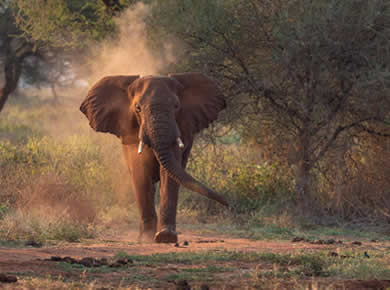

The Extended Southern Circuit—14 to 20 Days
The most ambitious version of this trip strings all four parks together into a single overland circuit: Saadani, Mikumi, Nyerere, Ruaha, with optional stops at the Udzungwa Mountains, Kitulo National Park (famous for its highland wildflowers), and potentially continuing north to Ngorongoro and the Serengeti. You need 14 to 20 days, a properly prepared vehicle, and genuine flexibility. What you get in return is an unmatched cross-section of Tanzania’s natural range.
Do You Need to Camp?
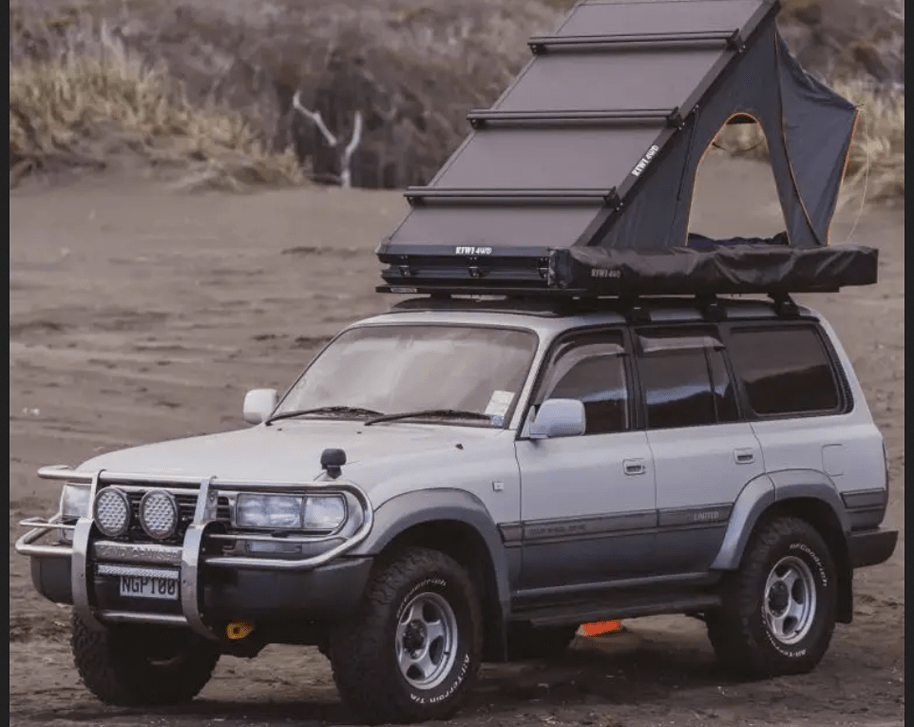
For most people doing a self-drive road trip in southern Tanzania, yes—camping is what makes the whole thing work financially and experientially.
Lodge prices in Tanzania’s premium parks are among the highest in Africa. A single night inside Ruaha or Nyerere during high season can run $400–$600 per person. A Land Cruiser with a rooftop tent lets you sleep inside the same park for a standard campsite fee—typically $20 to $50 per person per night. You wake up to the same sounds, the same stars, the same wildlife. You’re just paying a tenth of the price.
Beyond the cost, there’s something about sleeping elevated in the bush with the sounds of the African night all around—hyenas whooping, lions calling, and hippos splashing somewhere nearby—that no lodge bed quite replicates. For budget-conscious travelers, the rooftop tent is the most important piece of kit you can hire.
The Best Campsites Along the Route
Saadani National Park Public Campsites near the Wami River sit within the park boundary and offer minimal facilities. Bring everything. The wildlife activity after dark makes up for whatever you’re missing in comfort.
Mikumi National Park Campsite, near park headquarters, is one of the better-serviced public sites on the southern circuit — basic ablutions, good position, lions audible at night. The nearby Mikumi Wildlife Camp has bandas for anyone wanting one roofed night in the mix.
Camp Bastian in Nyerere is a well-regarded private site inside the park, frequently used by independent self-drivers. The riverside location is excellent, and combining a few nights here with occasional nights at somewhere like Selous Serena Camp is a good way to balance adventure with occasional comfort.
Msembe Campsite near Ruaha headquarters is the default base for self-drive visitors — a few metres from the riverbank, where elephant, buffalo, and crocodile activity is near-constant during the dry season. More determined off-road campers push further south towards Jongomero, on some of Ruaha’s most challenging tracks, for genuine solitude.
Kisolanza Farm, on the road between Iringa and Ruaha, has acquired legendary status among East Africa’s overlanding community. An old colonial farmhouse with camping in beautiful highland gardens, home-cooked food, fresh produce, cold beer, and genuinely warm hosts. An essential overnight stop on any Dar-to-Ruaha itinerary.
Practical self-drive routes from Dar es Salaam