Southern Africa Road Trips
Southern Africa: Diverse and Accessible
Create your own route
Self-Drive Safari in Southern Africa: Plan Your 4×4 Road Trip
Few journeys on earth rival the freedom of loading a 4×4, pointing it toward the horizon, and navigating your own way through the game-rich wilderness of Southern Africa. Unlike East Africa, where lodge-to-lodge flying safaris dominate, much of Southern Africa is tailor-made for the self-drive traveller. The roads — tarred, gravel, and sand — thread through national parks, community conservancies, salt pans, river valleys, and coastal dunes. For those willing to plan carefully and embrace a degree of uncertainty, the reward is an intimacy with the landscape that guided tours rarely offer.
Why Southern Africa Suits the Self-Drive Safari
Southern Africa has a combination of factors that make it uniquely hospitable to independent travellers. Infrastructure in countries like Botswana, Namibia, Zimbabwe, and South Africa is relatively reliable by continental standards. Self-catering campsites run by national park authorities are well-maintained, affordable, and bookable in advance. Road signage, while occasionally sparse, is generally functional. English is widely spoken. And critically, the distances between key destinations are manageable over several weeks without requiring a flight.
The wildlife is also approachable. Unlike dense equatorial forests, the open savanna, floodplains, and semi-arid bush of the south allow animals to be seen from a vehicle at close range. Many parks permit self-driving within their boundaries, meaning you are not dependent on a ranger to show you a pride of lions at dawn—you can idle your vehicle at the side of a waterhole and wait for the drama to unfold on your own terms.
Then there is the cost factor. Self-drive camping, cooking on a gas stove under a sky thick with stars, is dramatically cheaper than staying in lodges, and many travelers argue it is far more memorable.
Namibia: The Classic Self-Drive Destination
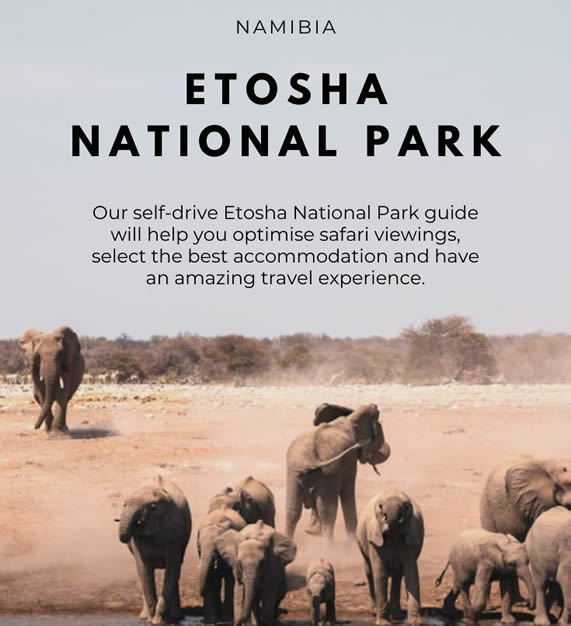
Namibia is arguably the finest self-drive safari destination in the world. The country is enormous — roughly the size of France and Germany combined — but has a population of only about three million. That means space, silence, and roads that stretch to the vanishing point with barely another vehicle in sight.
Etosha National Park
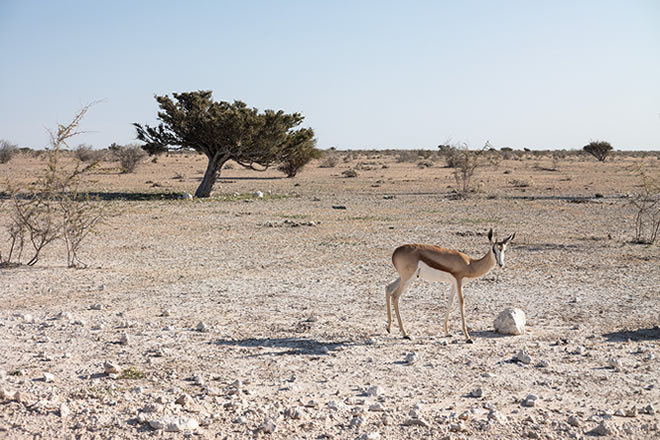
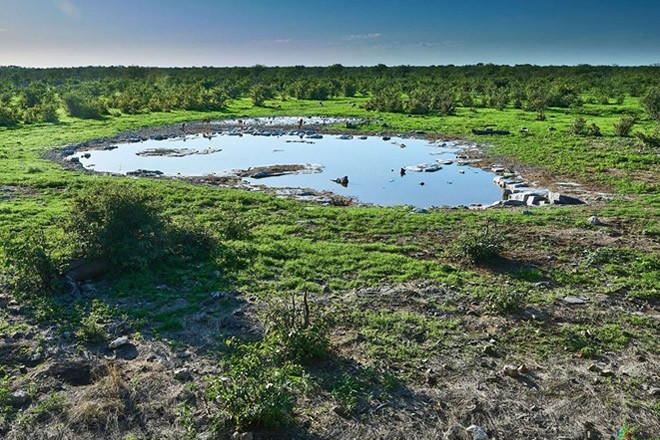
The crown jewel of any Namibian road trip is Etosha National Park in the north. At its heart is the Etosha Pan, a vast, blinding white salt flat that was once a lake and now acts as a magnet for wildlife during the dry season. The pan is not the attraction itself—rather, it is the series of waterholes that fringe it. Okaukuejo, Halali, and Namutoni are the three main rest camps, each with a floodlit waterhole that you can watch through the night from a bench. Elephants, black and white rhinoceros, lions, leopards, cheetahs, and enormous herds of zebra and springbok come to drink, often within meters of where you sit. The self-drive circuit roads between these camps allow independent visitors to cover vast ground at their own pace. For many travellers, Etosha alone justifies the entire journey to Namibia.
Okaukuejo (Western Section)
The western entry point and one of the most popular camps, famous for its floodlit waterhole where rhinos, lions, and elephants gather at night.
Halali (Central Section)
Centrally located between Okaukuejo and Namutoni, ideal for mid-park drives and exploring waterholes like Moringa and Goas.
Dolomite Camp (Far West)
The western Dolomite section requires a 4x4 and offers a more remote, rugged experience with hilly terrain and unique landscapes less visited by tourists
Sossusvlei and the Namib Desert; From Windhoek, the capital, most self-drivers head southwest toward the Namib Desert. The road drops into a landscape that seems almost cinematic in its strangeness — vast gravel plains give way to orange and red dunes that rank among the tallest in the world. Sossusvlei, within the Namib-Naukluft National Park, is the centerpiece. The dunes at Sossusvlei and neighboring Deadvlei—where ancient camel thorn trees stand like charcoal drawings against a white clay pan and towering dune walls—are photographed obsessively and yet never seem diminished by familiarity. The road into the vlei requires a 4×4 for the final kilometers, and visitors must enter the park before a certain hour to reach the inner pans, adding a sense of earned access.
The Skeleton Coast and Damaraland; North of the Namib, the Skeleton Coast is one of the most desolate and haunting landscapes on the continent. The southern section is open to self-drivers and the road passes through fog-shrouded dunes, seal colonies, and the rusting bones of shipwrecks. Damaraland, inland from the coast, is home to desert-adapted elephants and black rhino, tracked on guided drives from community conservancies — a model of wildlife conservation that has become a benchmark for the rest of the continent.
The Fish River Canyon: In the far south, the Fish River Canyon is often bypassed by travelers rushing toward Etosha, but it is one of the most spectacular geological formations in Africa. The second-largest canyon in the world after the Grand Canyon, it plunges nearly 550 metres into the earth. A series of viewpoints are accessible by road, and the five-day hiking trail along the canyon floor is legendary, though access to it is restricted to certain months of the year.
Botswana: Into the Delta and Beyond
Botswana is not the cheapest destination for independent safaris—a deliberate government policy of low-volume, high-value tourism means park fees are among the highest on the continent. But for those who can manage the cost, it offers some of the most extraordinary wildlife experiences anywhere in Africa, much of it accessible by self-drive.
The Okavango Delta
The Okavango is the world’s largest inland delta, a labyrinth of channels, lagoons, papyrus swamps, and palm-fringed islands that floods every year as rains from the Angolan highlands flow south. The delta’s perimeter areas — particularly the Moremi Game Reserve on its eastern edge — are accessible to self-drive travellers with high-clearance 4×4 vehicles. Moremi is one of the few places in Africa where you can drive yourself through a landscape of extraordinary biodiversity: wild dogs, leopards, lions, hippos, crocodiles, and a birdlife of almost absurd richness. The roads — sandy tracks that wind between islands — require experience and recovery equipment, including a sand shovel, hi-lift jack, and traction boards. Getting stuck is a genuine possibility and part of the experience.
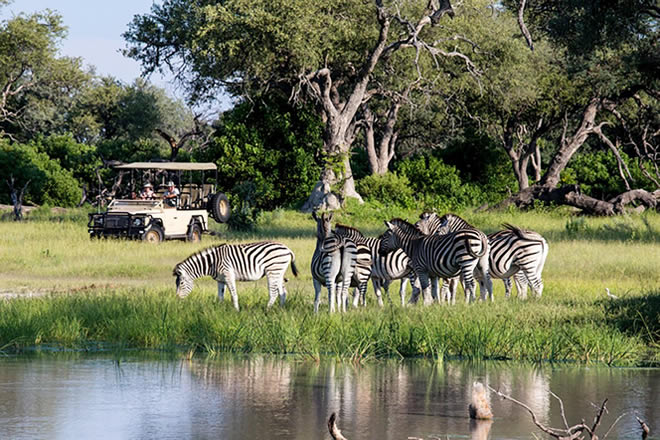
Maun → Moremi → Khwai (Circular, 7 Days)
This circular route starts and ends in Maun, passing through the wildlife-rich Moremi Game Reserve and Khwai Community Area in the Okavango Delta.
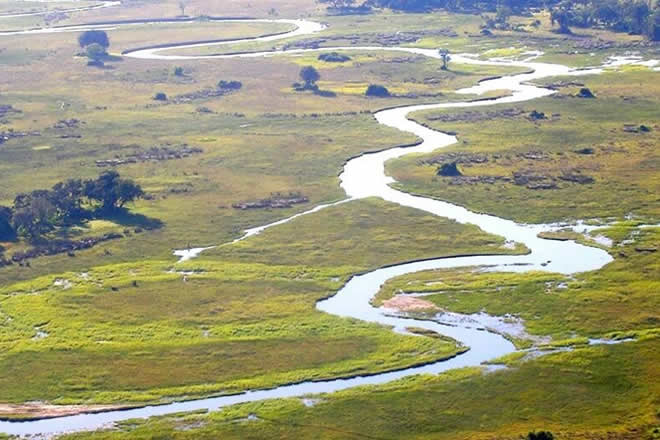
Kasane → Chobe → Moremi → Maun (10–14 Days)
An adventurous safari trip through Botswana, starting in Kasane and ending in Maun. During this 4×4 self-drive tour you visit Chobe National Park, Moremi Game Reserve, and the Okavango Delta.
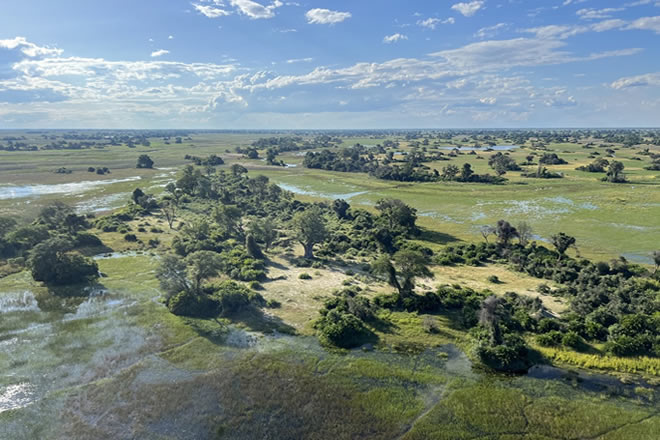
Maun → Khwai → Savuti → Chobe (Northeast 7 Days)
This itinerary begins in Maun, moving northeast through the Khwai Community Area — known for exceptional night drives — and continues onward to Savuti in Chobe National Park
Chobe National Park; The Chobe River forms the northern border between Botswana and Namibia, and Chobe National Park is one of the most wildlife-dense parks in Africa. The Chobe Riverfront area sees enormous concentrations of elephants — some estimates put the elephant population in the greater Chobe ecosystem at over 130,000, the largest in the world. Self-drive is permitted throughout the park, and the game viewing along the river road is exceptional. The town of Kasane, at the park’s eastern entrance, makes a convenient base and is a crossing point for travelers heading into Zimbabwe or Zambia for Victoria Falls.
The Central Kalahari and Makgadikgadi Pans, two vast, seldom-visited wilderness areas, complete the Botswana picture. The Central Kalahari Game Reserve is the second-largest nature reserve in the world, a semi-arid fossil desert where meerkats, brown hyenas, black-maned Kalahari lions, and gemsbok roam. It is remote, track navigation is challenging, and water must be carried in. The Makgadikgadi Pans National Park, to the north, features vast salt pans that fill briefly with flamingos during the rainy season and host the second-largest zebra migration in Africa. Camping on the edge of the pans under a full moon is an experience that travelers tend to remember for the rest of their lives.
Zimbabwe: The Comeback Destination
Zimbabwe’s tourism industry suffered badly during the political and economic turbulence of the 2000s, but the country has made a significant recovery as a safari destination. Its national parks are remarkable and far less crowded than comparable parks in South Africa or Kenya. For the self-drive traveller, Zimbabwe offers extraordinary value.
Hwange National Park; Hwange is Zimbabwe’s largest national park and one of Africa’s great wildlife sanctuaries. The park has an artificial waterhole system—pumped boreholes that sustain wildlife through the dry season—and the concentrations of elephant, buffalo, sable antelope, wild dog, and predator that gather around them are spectacular. The main camp and Sinamatella offer self-catering chalets and campsites, and the self-drive network of roads within the park is accessible to standard 4×4 vehicles. Hwange is often the first stop on a classic Zimbabwe road trip that continues northeast.
Matobo National Park; In the southwest of the country, the Matobo Hills are a landscape unlike anything else in Southern Africa. Ancient granite boulders, sculpted by millennia of erosion into improbable balancing formations, cover a rolling landscape that has been inhabited by humans for at least 40,000 years. The rock art in Matobo is among the finest and most concentrated in the world. The national park also has a rhino sanctuary—one of the best places in Africa to track white rhino on foot with a ranger—and is the resting place of Cecil Rhodes, whose grave occupies a granite hilltop with panoramic views. The area around Bulawayo makes an excellent base.
Mana Pools National Park: In the Zambezi Valley, where the land drops steeply to the river floodplain bordering Zambia, Mana Pools is one of the most celebrated wilderness areas in Africa and a UNESCO World Heritage Site. The park is famous for walking safaris and for the extraordinary behavior of its wildlife—elephants here have learned to stand on their hind legs to reach fruit from trees. Self-driving is permitted, and the camps along the riverbank are simple and beautiful. The rule that you can walk unguided in parts of Mana Pools gives it an edge-of-the-wild quality that few African parks can match.
South Africa is the easiest entry point for self-drive safaris in Southern Africa. Road infrastructure is excellent, accommodation options range from budget campsites to luxury lodges, and the national parks authority — SANParks — runs an efficient online booking system. The country is also the most ecologically diverse in the region, encompassing everything from subtropical savanna to alpine meadows and Mediterranean fynbos.
Kruger National Park
Kruger is the benchmark against which all African national parks are measured. It is vast — roughly the size of Wales — and its 21,000-plus square kilometres support the full complement of wildlife, including the Big Five. The network of tar and gravel roads within the park is extensive and well-maintained, allowing self-drivers to cover enormous distances. The southern section tends to have higher wildlife concentrations and more visitors; the far north is wilder, less frequented, and home to the rare roan and tsessebe antelope. The system of rest camps — Skukuza, Lower Sabie, Satara, Letaba, Punda Maria, and others — each have campsites, bungalows, restaurants, and fuel. Booking well in advance, especially for peak season, is essential.
The Garden Route and Addo Elephant National Park
South Africa’s southern coast — the Garden Route — is not traditional safari territory, but it is one of the most scenic drives in the country, connecting Cape Town through forests, estuaries, and coastal towns to the Eastern Cape. At the route’s eastern end, Addo Elephant National Park offers a genuine safari experience. Originally established to protect a remnant population of fewer than 20 elephants, Addo now holds over 600 and has expanded to include lion, black rhino, buffalo, and, in its marine section, great white sharks, whales, and African penguins. It is the only park in the world where you can see the Big Seven in one destination.
The Drakensberg and Surrounding Highlands
For road trippers willing to venture beyond game drives, the Drakensberg escarpment in KwaZulu-Natal and the Free State offers some of the most dramatic mountain scenery in Africa. The uKhahlamba-Drakensberg Park, a World Heritage Site, is famous for its San rock art, its hiking trails, and its amphitheatre — a near-vertical basalt wall five kilometres wide and more than a kilometre high. Nearby, the Golden Gate Highlands National Park in the Free State features brilliant sandstone formations and herds of blesbok and springbok on open grassland.
Crossing Borders: The Multi-Country Circuit
One of the great advantages of self-drive travel in Southern Africa is the relative ease of crossing borders between countries. A popular circuit combines Zimbabwe’s Victoria Falls with Botswana’s Chobe, then heads south through Namibia’s Caprivi Strip (now officially named Zambezi Region) and into Etosha, before looping back south. Another classic combines South Africa’s Kruger with Mozambique’s Bazaruto Archipelago and then into Zimbabwe.
The necessary paperwork — temporary import permits for vehicles, cross-border insurance, KAZA univisa for Zimbabwe and Zambia simultaneously — has become increasingly streamlined, though it still requires preparation. Many rental companies in Namibia and South Africa now explicitly permit multi-country travel.
Practical Considerations for the Independent Traveller
Vehicle choice is critical. A high-clearance 4×4 with a long-range fuel tank is essential for Botswana and the more remote parks of Zimbabwe and Namibia. South Africa’s Kruger and most of its other parks can be comfortably driven in a standard sedan.
Timing matters enormously. The dry season — roughly May to October — concentrates wildlife around water sources and makes roads accessible. The wet season brings lush greenery, newborn animals, and extraordinary birdlife, but also turns some roads impassable and reduces visibility in dense bush.
Booking in advance is increasingly necessary. SANParks in South Africa and the Department of Wildlife and National Parks in Botswana both have online booking systems. Zimbabwe’s parks can often be booked at the gate, but this is becoming less reliable.
Carrying enough water, food, and emergency supplies is non-negotiable in the more remote parks. Fuel stations can be hundreds of kilometres apart.
The Deeper Appeal
Ultimately, what draws independent travellers to Southern Africa’s road trip circuits is something that transcends logistics and wildlife checklists. It is the experience of moving through a landscape on self drive safari, making decisions, sitting in silence at a waterhole for three hours because something tells you to stay, and waking at 5 am in a tent to the sound of a lion calling two hundred metres away. Southern Africa, more than almost anywhere else on earth, still offers that particular freedom — and the roads that lead into it are there for anyone willing to follow them.