
- June 21, 2026
- Safari Guides
The Wami River, Saadani National Park: Hippos, Crocs & Wildlife by Boat
Most visitors come to Saadani National Park expecting the obvious draw: it is, after all, the only protected area in Tanzania where the bush rolls straight down to the Indian Ocean, letting you watch elephants on the beach and end a game drive with a swim. But for many who have actually spent time there, the real highlight turns out to be a tributary you didn’t hear much about beforehand — the Wami River, which forms the park’s southern boundary and offers a kind of wildlife encounter that the open savanna simply can’t replicate.
A River With Its Own Character
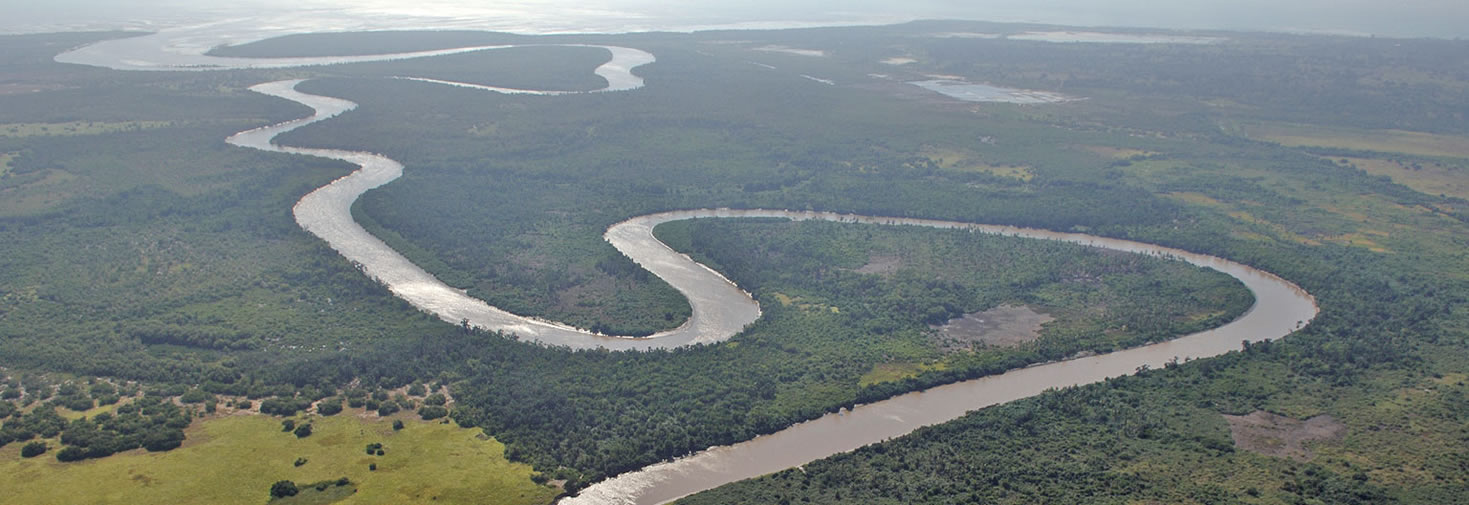
The Wami rises far inland in central Tanzania and winds nearly 600 kilometers before emptying into the Indian Ocean just south of Saadani village. By the time it reaches the park, it has slowed into a broad, brown, unhurried channel, fringed with dense stands of borassus and doum palms, tangled mangroves near the estuary, fig trees, and overhanging acacia. The banks are a patchwork of mudflats, reed beds, and forest, which makes the river corridor one of the most biologically rich strips of habitat in the park — a transition zone where coastal forest, savanna, and wetland all meet.
This ecological layering is part of what makes the Wami so rewarding to explore. Unlike a single-habitat landscape, the river supports an unusually wide cast of species within a short stretch of water, and because animals must come to the river to drink, bathe, or hunt, a boat moving quietly along the current tends to produce sightings that a vehicle bouncing along dirt tracks simply cannot match in frequency or intimacy.
Why Boat Safaris Change Everything
A game drive, for all its virtues, keeps you at a polite distance. Animals on the savanna are wary of vehicles, the bush is thick, and lions or antelope can vanish into cover in seconds. A boat safari on the Wami inverts that dynamic almost entirely. The boat is quiet, low in the water, and — crucially — the animals that live in and around the river have grown used to its slow, predictable passage. The result is proximity that feels almost unreasonable by safari standards.
Nowhere is this more apparent than with the Wami’s hippo pods. The river holds one of the densest hippo populations in coastal Tanzania, and on a boat safari, it’s entirely normal to glide within twenty or thirty meters of a pod wallowing in a deep pool, ears twitching, nostrils periscoping above the surface, the occasional enormous yawn revealing the full geometry of a hippo’s jaw. From a vehicle, hippos are usually a distant grey hump in murky water, glimpsed once and then ignored. From a boat, you watch them breathe, jostle for position, and occasionally make a mock charge toward the boat’s bow — close enough that guides will cut the engine and let the current do the steering, both for stealth and a measure of respect for an animal responsible for more human fatalities in Africa than almost any other.
Nile crocodiles are the other headline act, and the river’s muddy banks are tailor-made for them. Boat safaris on the Wami routinely pass within a few meters of crocodiles basking with jaws agape on sandbanks, or gliding alongside the boat with just eyes and nostrils breaking the surface. Some of the individuals along this stretch are genuinely large — four meters or more — and the flat vantage point of a small boat, sitting only a little above the waterline, puts you at eye level with them in a way that feels primal rather than staged. Guides who know the river can often predict which bend will produce a crocodile sighting, threading the boat along the shaded banks where the animals prefer to bask in the cooler hours of morning and late afternoon.
Beyond the Big Two
While hippos and crocodiles are the headline acts, the Wami’s boat safaris deliver a steady stream of supporting sightings that add up to one of the richest wildlife experiences in the park:
- Birdlife is extraordinary along the river corridor. Saadani sits at a crossroads of coastal and inland bird species, and the Wami is where many of them concentrate. Expect African fish eagles perched in dead trees issuing their unmistakable call, goliath herons stalking the shallows, malachite kingfishers flashing electric blue along the banks, palm-nut vultures in the borassus palms, and — for the fortunate — sightings of the rare mangrove kingfisher or even the elusive Pel’s fishing owl roosting in riverine shade.
- Sykes’ monkeys and vervet monkeys move through the canopy along the banks, sometimes pausing to watch the boat pass with as much curiosity as the passengers show them.
- Elephants and other game occasionally come down to drink at the river’s edge, offering the unusual spectacle of a savanna giant viewed from water level rather than from a vehicle.
- Reedbuck, waterbuck, and bushbuck browse the floodplain vegetation, often visible only from the river since the dense riverine bush conceals them from inland tracks.
- A boat trip toward the estuary, where the Wami meets the Indian Ocean, adds mangrove forest to the mix, along with the chance of spotting hippos that have ventured close to the brackish water and the occasional dolphin near the river mouth.
Most boat safaris depart early in the morning, when the light is soft, the air is cool, and wildlife activity along the banks is at its peak, though late-afternoon trips have their own appeal as the lower sun turns the water gold and animals return to the banks to drink before dusk. Trips typically last one to two hours and are run in small, flat-bottomed boats with a maximum of six to eight passengers, keeping the experience intimate and the boat quiet enough not to spook wildlife.
Saadani’s Other Highlights
The Wami River is the park’s quiet centrepiece, but it sits within a broader patchwork of experiences that make Saadani genuinely distinctive among Tanzania’s parks:
The beach-bush combination. Saadani is the only East African park where you can do a game drive in the morning and walk straight onto an unspoiled Indian Ocean beach in the afternoon. Elephants and other wildlife sometimes wander close to the shoreline, and a handful of camps are positioned to let guests watch the sun set over the ocean after a day spent tracking game inland.
Game drives across the savanna and the woodland. Inland from the river, Saadani’s mix of open grassland, acacia woodland, and thicket supports giraffe, buffalo, wildebeest, hartebeest, warthog, and a small but resident population of lions, along with healthy numbers of elephants. Sightings here tend to be more spread out than in the northern circuit parks, which suits travelers looking for a less crowded, more exploratory safari experience.
Mkwaja and the historic ruins. The park incorporates remnants of old Arab trading settlements and ruins around Saadani village itself, a reminder that this stretch of coast was a center of the 19th-century slave and ivory trade routes — giving the park a layer of cultural and historical interest beyond its wildlife.
Turtle nesting. Green turtles nest on Saadani’s beaches during certain months, and some camps offer the chance to witness nesting or hatching events, a rare wildlife spectacle that has nothing to do with the river at all.
Walking safaris. Because Saadani permits walking with an armed ranger in certain zones, visitors can combine the boat experience on the Wami with a guided walk through the bush, adding a third sensory dimension — sound, scent, and scale — that neither a vehicle nor a boat fully provides.
The Takeaway
What makes Saadani worth the detour from Tanzania’s more famous northern circuit isn’t any single spectacular sighting, but the way its different habitats stack on top of each other within a single, compact park. The Wami River is where that variety is most concentrated and most accessible — a slow-moving thread of water where hippos surface an arm’s length away, crocodiles bask close enough to study their scales, and the surrounding forest hums with birdlife, all delivered with a level of intimacy that no game-drive vehicle, however well-positioned, can quite reproduce.