
Plan Your 4×4 Gorilla Trekking Safari in Rwanda and Uganda
The Call of the Wild: An Overland safari Through the Heart of Africa
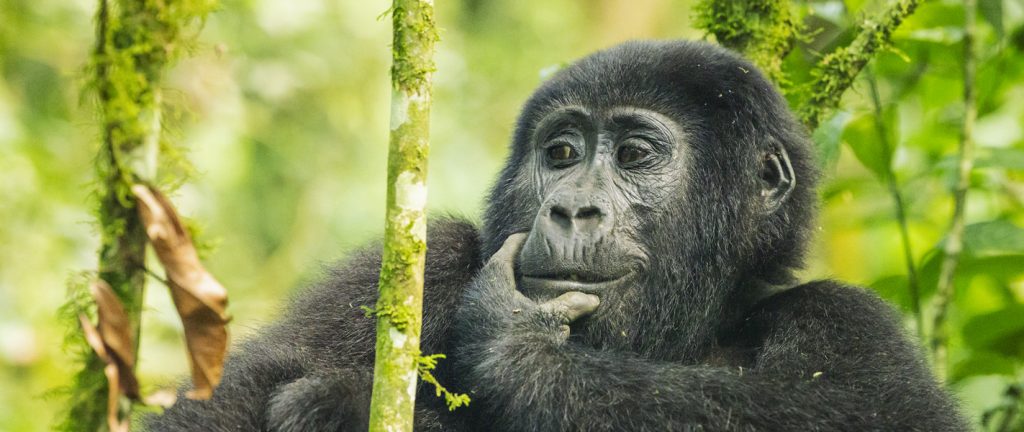
Few journeys on Earth match the raw intensity of roaring through the emerald highlands of East Africa in a rugged 4×4, heading for encounters with mankind’s closest living relatives. In the misty Virunga Mountains, Rwanda and Uganda offer what many seasoned travelers consider the ultimate overland safari: the freedom of the open road, and the amazing privilege of being just meters away from a family of mountain gorillas. This is not tourism in the usual sense, it is pilgrimage, requiring preparation, respect and a spirit of adventure.
Why 4×4? Terrain Calls for It
Choosing to tour Rwanda and Uganda in a 4×4 vehicle is not just a matter of preference, it is a necessity imposed by the terrain. As the name suggests, Uganda’s Bwindi Impenetrable National Park is located at the end of roads that become rutted tracks in the rainy season, where rivers of red mud turn what seem like highways into treacherous passages. True to billing, Rwanda’s famed “Land of a Thousand Hills” has winding mountain roads and steep inclines, with surfaces that can go from smooth tarmac to rocky switchbacks without warning.
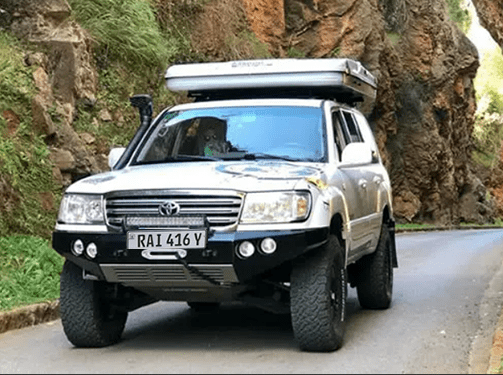
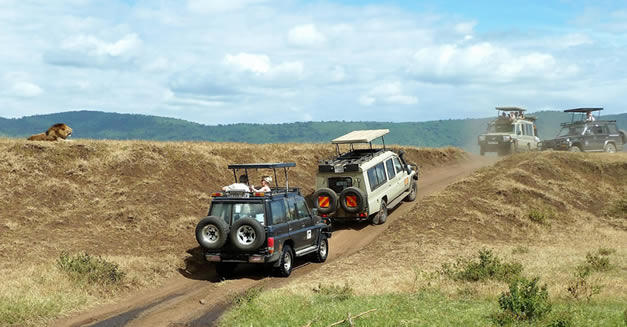
Your mobile base camp, shelter from sudden downpours and trusted companion through border crossings is a proper safari vehicle (normally a Toyota Land Cruiser or Nissan Patrol with raised suspension, all-terrain tires and a pop-up roof for viewing game). All of the gorilla tracking tours by tour operators are in comfortable 4×4 safari vehicles, with professional local safari guides who know every nuance of these demanding routes.
Related Gorilla Trekking Safaris
Bwindi Gorilla Trekking safari in Uganda
Mountain gorillas have survived wars, poaching epidemics and habitat destruction. Their survival depends, in a way, on the willingness of travelers to make this trip.

Golden Monkey tracking in Mgahinga
Mountain gorillas have survived wars, poaching epidemics and habitat destruction. Their survival depends, in a way, on the willingness of travelers to make this trip.

4 Days Rwanda Gorilla Trekking Safaris
Mountain gorillas have survived wars, poaching epidemics and habitat destruction. Their survival depends, in a way, on the willingness of travelers to make this trip.
Volcanoes National Park from Kigali
Most Rwanda itineraries start in Kigali. It has re-invented itself, and is one of Africa’s cleanest cities. It is also one of its most orderly cities. The drive north takes about 2.5 hours. It goes to Volcanoes National Park. The park is in Musanze. This is a short transfer. It is short by African standards. The drive passes picturesque scenery. It is some of the most picturesque on the continent.
Rolling hills tumble in all directions. Their slopes are terraced. They have banana plantations. They have tea estates. They have smallholder farms. These quilt the landscape. The landscape has infinite shades of green. Gorilla trekking is the star attraction. It is in Volcanoes National Park in Rwanda. The park hosts some 12 habituated gorilla families. It is a relatively accessible experience. It has well-polished logistics.
The trekking itself, while still strenuous, is generally shorter and less muddy than the equivalent trek in Uganda. Rwanda’s trails are steeper and more defined and the park is smaller, so you will encounter many within two to three hours of leaving. The reward – one magical hour with a mountain gorilla family – is the same whatever country you choose, but what Rwanda offers is seamless efficiency.
The permits here cost $1,500 per person, nearly double the price in Uganda, but travelers always say the extra time in the field and better infrastructure are worth it. If you are coming to Rwanda for gorilla trekking but are also doing business or visiting other parts of Africa such as the Serengeti in Tanzania or the Masai Mara in Kenya, then the small size of the country can be an advantage.
Beyond the Gorillas
A 4×4 trip through Rwanda brings rewards for those who persist. Musanze Caves offer a peek underground, formed by centuries of lava flow. Dian Fossey’s grave and former research station are important sites for understanding the history of conservation. Golden monkey tracking is a less strenuous alternative to gorilla treks, while ascents of Mount Bisoke or the more strenuous Mount Karisimbi will appeal to active travellers with crater lakes and alpine views.
After the exhausting walks in the mountains, Lake Kivu is the best place to recover. It is along the western border of Rwanda. In the resort towns of Rubavu and Karongi, you can kayak, take boat cruises to bat-inhabited islands, or simply enjoy the pleasure of eating fresh tilapia at lakeside restaurants as the sun sets over Congolese hills. The Congo Nile Trail, partially accessible by 4×4, traces the lake’s mountainous shoreline and reveals secluded beaches and coffee plantations that are invisible to most fly-in visitors.
Uganda: The Road Not Taken
The long journey to Bwindi
Uganda demands more of its visitors and offers more in return. Bwindi Impenetrable National Park, home to more than half of the world’s remaining mountain gorillas, is an 8 to 9 hour drive from Kampala or Entebbe – a journey that would deter the faint-hearted but entice the true adventurer. Or, it’s just a 4 hour drive from Kigali via the Katuna border, so the Rwanda-start, Uganda-trek option is gaining popularity with those who want to make the most of their time and not miss out on the Ugandan experience.
The road from Kampala in Uganda, however, is the quintessential African road trip. The tarmac gives way to murram, the murram gives way to mud, and civilization begins to dwindle as you pass through rural communities where children wave enthusiastically at passing vehicles. The route takes in Queen Elizabeth National Park, where tree-climbing lions lounge across fig tree branches, and Kibale National Park, where chimpanzee tracking provides a lively contrast to the gorilla experience.
Bwindi itself is divided into four different trekking sectors – Buhoma, Ruhija, Rushaga and Nkuringo – each with different terrain difficulties and gorilla family dynamics. Visitors to Uganda can request specific sectors, and park staff attempt to match fitness levels with appropriate families, unlike Rwanda’s centralized system. That flexibility is crucial, since experiences vary widely: some trekkers reach their assigned gorilla family after 30 minutes of easy walking, while others bushwhack for five hours through what one traveler described as “the most challenging terrain imaginable,” negotiating fallen logs, stinging nettles and vegetation so thick that guides must cut paths with machetes.
The Experience of Habituation
Only Uganda provides the gorilla habituation experience, a more in-depth version of primate research that enables four people to spend up to four hours with a semi-wild gorilla family, following the slow process of acclimatizing to human presence. This permit, priced at $1,500, is on par with the usual trekking fee in Rwanda, but the added time and educational aspects—getting to work with researchers and learn about behavior and social dynamics—attract photographers and primatologists who want more than just a tourist snapshot. It needs more fitness and patience; these gorillas are still shyer, less predictable in their movements, and are still adjusting to observers.
Uganda’s Prime Safari Circuit
Uganda really excels in the ability to combine gorilla trekking safaris with the traditional African wildlife tour experiences. A 4×4 vehicle for such itineraries could take weeks, taking in Murchison Falls National Park, where the Nile hurtles through a narrow gorge, Queen Elizabeth National Park, with its wonderful diversity of wildlife and boat cruises on the Kazinga Channel, and Kibale Forest, home to the largest concentration of primates in Africa. That incredible diversity is packed into a relatively small part of the country, which is why it has the nickname “Pearl of Africa.”
Rwanda-Uganda Circuit Logistics
Gorilla trekking at its best has become the gold standard of a combined Rwanda-Uganda itinerary. The drive from Volcanoes National Park to Bwindi Impenetrable Forest is quite short, so this cross-border route is feasible for anyone wanting to trek in both countries and compare the two experiences. This is available with the East African Tourist Visa which allows multiple entries into Rwanda, Uganda and Kenya for one fee. But note that Tanzania is not covered by this visa.
Crossing the border at Katuna (between Rwanda and southwestern Uganda) or Chanika requires the right vehicle documents and a lot of patience, but things have become far smoother in recent years. Rwanda is good for the self-drive enthusiast, with the main roads being well looked after and clear signposting, but you will still need comprehensive insurance and a good check of your vehicle. Uganda’s roads need more tending – main roads are getting better but rural roads can break up very quickly and a professional driver-guide’s services often pay dividends.
The suggested combined itineraries are 7 to 13 days or more. A week-long tour could start in Kigali, trek gorillas in Volcanoes National Park, cross to Bwindi for a second trek or the habituation experience, and return to Kigali for departure. Longer trips include the savannah parks of Uganda and Akagera National Park in Rwanda for Big Five viewing, plus cultural experiences through the Batwa pygmy communities that once lived in the forests.
Most Popular
- All Posts
- Professional
- Safari Guides
- Self drive Tours
- Seo
When to Visit –
Seasons & Strategy
Mountain gorilla trekking is available all year round; however, the experience is highly seasonal. The dry periods (mid-December to February, and June through mid-September) provide the most dependable conditions, with firmer trails and less risk of malaria. These months are also the peak season for demand, permits are sold out months in advance, and lodges charge premium rates.
The rainy seasons, especially March to May, are a different proposition. Trails turn into rivers of mud, treks grow longer as gorillas descend to lower altitudes, and the physical challenge increases exponentially. But this is when the forest is most alive, when waterfalls roar, when mist dances through the canopy in ethereal patterns, and the tourist crowds thin to a dedicated few. In these months, hotels may offer great discounts, and availability is much better. Plan. For high season, reserve your permits 6 to 12 months before your trip. Double-check your permits align with your flight schedule before purchasing, as they are date-specific and nonrefundable, which can be an expensive error for the unprepared. The shoulder months of June and December often provide the perfect balance of good conditions, manageable crowds and often reduced rates.
Things To Think About When Out On The Road
Vehicles & Equipment
But a true 4×4 for this region needs more than four-wheel drive. Roof racks hold the luggage that accumulates on long safaris; charging ports keep cameras and phones powered on long drives between lodges; and a refrigerator or cooler box keeps supplies fresh in remote areas where amenities disappear. Most safari operators fit their vehicles with first-aid kits, tool kits and emergency communication devices, but if you are driving yourself you should check that these provisions are in place.
Packing is a matter of serious thought. Waterproof everything, bags, camera gear, personal belongings because in these mountains regardless of the season, rain comes without warning. You’ll definitely want a good pair of hiking boots with aggressive treads, and many hikers also wear gaiters to keep mud and stinging nettles out of their boots. Long pants and sleeves protect from the vegetation, and layers provide for the temperature swings, from chilly mornings at altitude to warm afternoons. Contrary to popular belief, experienced trekkers surprisingly rank garden gloves among their most recommended items, providing grip on wet vegetation and protection from thorns.
Physical Conditioning and Expectations
Gorilla trekking is a physical activity that ranges from moderate to strenuous, but you don’t have to be athletic. Altitude (treks are between 2,000 and 3,000 meters), steep gradients and unpredictable terrain conspire to leave even the fittest breathless and challenged. In both countries Rangers can assign suitable families to cater for different levels of fitness. Porters can be hired to carry packs and to provide physical support on difficult sections. If you have severe mobility problems, sedan chairs carried by teams of porters will give you access that would be otherwise impossible.
The psychological preparation is equally important. No one can tell how long a trek will be, as the gorillas roam freely in their habitat and have to be found again by trackers each morning. Some visitors find their quarry in 45 minutes and feel the experience somehow spoiled by its brevity; others emerge after eight hours of struggle feeling they have earned every second of their allotted hour. The only thing we can count on is that nothing is certain, and accepting that uncertainty is part of the transformational power of the journey.
The Encounter: Why We’re Here
The planning, the driving, the physical effort, crystallize in one hour that cannot be well described. That’s why travelers brave the long roads and steep climbs when suddenly the trackers tell you the gorillas are close, the brush opens up and there’s a silverback the size of a big man but moving with impossible grace, a juvenile stares you in the eye with what seems real curiosity.
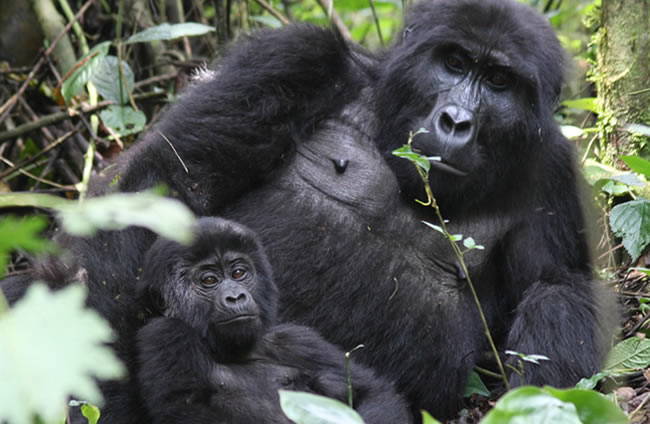
Mountain gorillas share 98% of DNA with humans, and they know it. They watch their human visitors with what seems an intelligent awareness, tolerating our presence with a patience that seems generous. Mothers hold babies with a tenderness that knows no species; silverbacks maintain their watchful authority; adolescents roughhouse with the abandon of children everywhere. The rules are strict: seven meters, no flash, no eye contact with dominant males, but within these boundaries an extraordinary intimacy develops.
Photographers have it tough. When the canopy is dense, light is dappled and low; any movement has to be caught with fast shutter speeds; and equipment is under constant threat from humidity. But the images recorded, however technically flawed, are beloved artifacts of an encounter that words can only approximate. Many world travelers will tell you to put the camera down and take it all in through the naked eye instead of the viewfinder, creating memories no memory card can hold.
The Road is the Destination.
This 4×4 safari through Rwanda and Uganda for gorilla trekking is more than a normal safari. It demands active participation, not passive observation; it rewards preparation and flexibility; it creates the conditions for genuine encounter, not managed performance. The long hours on rutted roads, the border crossings and bureaucratic negotiations, the physical challenge of the trek itself – all become part of the experience, not a hurdle to it.
You can choose Rwanda’s polished efficiency, Uganda’s rugged authenticity, or the combined circuit that takes in both, but the basic transaction is the same: you give your time, your effort, and your respect, and in return you get a glimpse of a world that exists parallel to our own, governed by different rules, shaped by different imperatives, yet connected to us by bonds of biology and shared evolutionary history.
Conservation & Community
The $800 permit in Uganda and the $1,500 fee in Rwanda are more than just access fees: they’re the main source of funding for gorilla conservation. The tourism model has proved remarkably successful: there are fewer than 1,100 mountain gorillas remaining in the wild, concentrated in these two countries and the Democratic Republic of Congo. Some of the permit revenues go to local communities which gives them economic incentives to conserve what once seemed like inevitable poaching and habitat destruction.
This ecosystem is supported by the 4×4 road trip model in ways that fly-in tourism cannot. Road travel utilises drivers and mechanics and populates fuel stations. It supports local restaurants and community lodges and generates the dispersed economic benefit that transforms conservation from an abstract ideal to a practical livelihood. The travellers who drive, interact with the communities along their route, and buy crafts and produce from roadside vendors are practising a model of tourism that sustains both the gorillas and the human communities who share their landscape.