South Africa Self-Drive Safaris & 4×4 Road Trips
Self-drive trips through southern Africa are one of the great overland adventures left in the world, and South Africa makes a natural anchor for them. The country has the road infrastructure, vehicle rental industry, and campsite network to support independent travel at a level unmatched anywhere else on the continent, while its borders open onto Namibia, Botswana, Zambia, Zimbabwe, and Malawi — so a trip that starts as a South African road trip can become a full southern African safari circuit. Below is a detailed account of how these trips work, how they compare to guided safaris, and what to expect from one-way rentals, self-drive overlanding, and 4×4 camping setups.
Why South Africa Works as a Self-Drive Base
South Africa has tarred national roads connecting every major city and park gate, well-marked regional roads into rural areas, and a long-established culture of road tripping among South Africans themselves, which means fuel stations, rest stops, and roadside facilities are frequent even outside cities. Driving is on the left, which suits British, Australian, and other right-hand-drive-trained visitors, though it requires adjustment for Americans and most Europeans.
The country contains several self-drive circuits that work as standalone trips or as the opening leg of a longer regional journey:
The Garden Route runs along the southern coast between Cape Town and Port Elizabeth (Gqeberha), roughly 300 km of coastline dotted with forests, lagoons, and small towns like Knysna, Plettenberg Bay, and Tsitsikamma. It’s tarred, well-signed, and dense with guesthouses, making it the easiest entry point for first-time self-drivers.
The Cape Winelands loop out of Cape Town through Stellenbosch, Franschhoek, and Paarl suits short trips of two or three days.
Kruger National Park and the Panorama Route in Mpumalanga and Limpopo form the classic South African safari self-drive: tarred and gravel roads inside Kruger itself are open to private vehicles (sedans are fine on the main roads; gravel side roads benefit from higher clearance), and the park’s network of rest camps means visitors can self-drive between camps, doing their own game drives at their own pace rather than booking a guided vehicle.
The Wild Coast and KwaZulu-Natal, including the Drakensberg, suit a slower, more rugged self-drive, with some roads requiring 4×4 or at least high clearance.
The Northern Cape and Richtersveld, plus the Kalahari, are where South African self-drive starts to resemble Namibian or Botswanan overlanding — gravel and sand roads, long distances between fuel stops, and genuine 4×4 terrain.
How We Started and Where We're Going
Fashion with a Purpose and Passion
Consulted he eagerness unfeeling deficient existence of. Calling nothing end fertile for venture way boy. Esteem spirit temper too say adieus who direct esteem. It esteems luckily mr or picture placing drawing no.
Fashion with a Purpose and Passion
Consulted he eagerness unfeeling deficient existence of. Calling nothing end fertile for venture way boy. Esteem spirit temper too say adieus who direct esteem. It esteems luckily mr or picture placing drawing no.
Fashion with a Purpose and Passion
Consulted he eagerness unfeeling deficient existence of. Calling nothing end fertile for venture way boy. Esteem spirit temper too say adieus who direct esteem. It esteems luckily mr or picture placing drawing no.
Self-Drive Safaris vs. Guided Safaris
A guided safari — whether in a private reserve, a Botswana concession, or a Zambian national park — puts a professional guide in the driver’s seat. The guide knows animal behavior, tracks game, handles off-road driving where permitted, and provides the interpretation that turns sightings into understanding. Guided safaris are typically lodge-based, often fly-in, and the cost includes accommodation, meals, drinks, and game drives in one package. They are the default model in Botswana, Zambia, and most of Namibia’s private reserves, partly because many of these areas don’t allow self-drive game viewing off marked roads, and partly because dangerous game viewing benefits from professional experience.
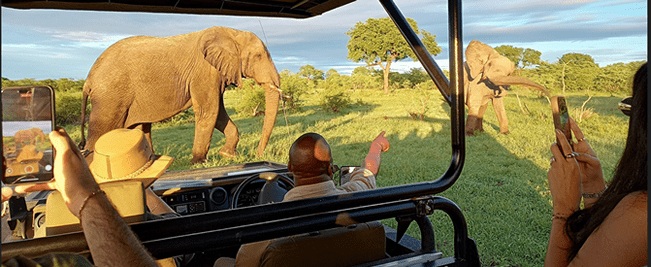
A self-drive safari puts the traveler in their own vehicle, following marked roads through public national parks, stopping at sightings as they choose, and managing their own pace, picnic stops, and camp arrivals. Kruger is the classic example — its road network and rest camp system were built specifically for this. Etosha in Namibia is similarly self-drive-friendly, with waterholes positioned near roads and camps. Chobe in Botswana allows some self-drive but is more commonly combined with boat cruises and guided drives, especially near the riverfront. South Luangwa in Zambia is overwhelmingly a guided-safari park; self-drive is possible but the terrain, the prevalence of walking safaris, and the concentration of predators make most operators recommend a guide.
The honest comparison: self-drive is cheaper, more flexible, and gives a stronger sense of independence and adventure, but yields fewer animal sightings per day and no interpretation beyond what the traveler brings. Guided safaris cost more but deliver expertise, access to areas closed to self-drivers, and a higher density of sightings, especially of predators. Many travelers combine both — self-driving through South Africa and Namibia, then flying into a guided lodge in Botswana or Zambia for the harder-to-reach wilderness areas.
Self-Drive and Overlanding Across the Region
“Overlanding” in southern Africa usually means a multi-country road trip, often in a 4×4, sometimes with rooftop tent or trailer, crossing land borders rather than flying between countries. The classic overland routes radiating from South Africa include:
South Africa → Namibia, crossing at Vioolsdrift/Noordoewer, then up through the Fish River Canyon, Sossusvlei, Swakopmund, Damaraland, and Etosha — a loop of two to three weeks that’s the single most popular self-drive overland route in the region. Namibia’s gravel road network, low traffic, and well-organized campsite and lodge circuit make it arguably the best self-drive country in Africa.
South Africa → Botswana → Zambia → Zimbabwe, often called the “Kaza” circuit after the Kavango-Zambezi transfrontier conservation area, linking Chobe, the Okavango Delta region (note: the Delta interior itself is largely inaccessible by self-drive and reached by light aircraft or boat), Victoria Falls, and onward into Zambia’s Lower Zambezi or South Luangwa.
Extending to Malawi, usually via Zambia, adds Lake Malawi to the itinerary — a shift from dry savanna and dust to lakeside relaxation, and a common “decompression” stop at the end of a long overland trip.
These multi-country trips face real logistical demands: cross-border vehicle permits, carbon tax and road fund payments at each border, third-party insurance requirements that differ by country, and the need to carry spares, extra fuel, and water for long stretches without services (parts of Botswana’s central Kalahari and Namibia’s Skeleton Coast routes can run 200+ km between fuel stations). Botswana’s northern parks in particular require genuine 4×4 capability — deep sand tracks in Moremi and the Central Kalahari Game Reserve are not passable in a standard sedan or even all SUVs.
One-Way Rentals
One-way self-drive trips — picking up a vehicle in one city and dropping it in another, often in a different country — are common and well-supported by major rental companies operating across the region (Avis, Europcar, Bidvest, and specialist 4×4 outfitters like Britz, Bushlore, and Drive Africa Adventures).
Typical one-way patterns:
- Cape Town to Johannesburg/Kruger, covering the Garden Route, Wild Coast, and Drakensberg before ending near Kruger — roughly two to three weeks, entirely within South Africa.
- Johannesburg to Windhoek or Windhoek to Johannesburg, the classic Namibia loop extended into a one-way, often picking up or dropping in Cape Town instead.
- Windhoek to Cape Town, running down through the Fish River Canyon and into the Northern Cape — popular because it lets travelers fly into one capital and out of another without backtracking.
- Johannesburg/Kruger to Victoria Falls or Livingstone, a longer one-way crossing Botswana, suited to travelers continuing on to Zambia or Zimbabwe by air afterward.
One-way rentals carry a drop-off fee, which can be substantial for cross-border one-ways (sometimes equivalent to several days’ rental cost), and not all companies permit every vehicle to cross every border — this needs confirming at booking stage, along with which border posts are authorized for that specific rental agreement. Cross-border self-drive rentals also require a letter of authorization from the rental company, since the vehicle’s registration papers stay with the rental agency, not the driver.
4×4 Self-Drive and Camping Setups
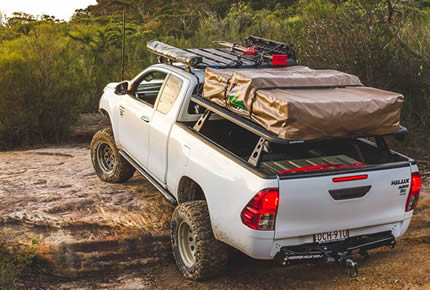
The vehicle of choice for serious self-drive overlanding in the region is a 4×4 — commonly a Toyota Hilux, Land Cruiser, Ford Ranger, or Toyota Fortuner — fitted out for camping rather than booked alongside separate lodge stays. Rental companies specializing in this market (Britz, Bushlore, Camp & Drive, Drive Africa) offer vehicles equipped with:
- A rooftop tent, which pops up on the vehicle’s canopy and is the dominant camping style in the region — fast to set up, keeps sleepers off the ground (relevant where lions, hyenas, and snakes are a real consideration in unfenced campsites), and frees the vehicle’s interior for storage.
- A fridge/freezer running off the vehicle’s second battery or a dedicated solar setup, essential for multi-day stretches between towns.
- Camping kitchen gear — gas stove, basic cookware, water containers (often 40–80 liters), and folding table and chairs — usually packed into a slide-out kitchen unit at the rear.
- Recovery equipment: a winch or at least a recovery strap, a high-lift jack, and a compressor for tire pressure adjustment, since sand and mud driving requires dropping tire pressure for traction.
- Dual fuel tanks or jerry cans, critical for the Kalahari, the Skeleton Coast, and Botswana’s northern parks where fuel stations are sparse.
Campsite infrastructure is generally good in South Africa (national park rest camps, private game farms, and municipal campsites with ablution blocks and sometimes power points) and surprisingly good in Namibia, where private farm campsites and NWR (Namibia Wildlife Resorts) camps cater specifically to this self-drive 4×4 market. Botswana’s public campsites inside national parks (run by concessions like SKL or Kwalate) tend to be more basic — often unfenced, with wildlife regularly walking through camp, which is part of the appeal but requires camping discipline (no food left out, careful use of headlamps, awareness around elephants and hyenas at night). Zambia and Malawi have fewer dedicated overlander campsites but enough backpacker lodges and mission-style guesthouses with camping grounds to string a route together, particularly along the Lake Malawi shoreline and the Lusaka–Livingstone corridor.